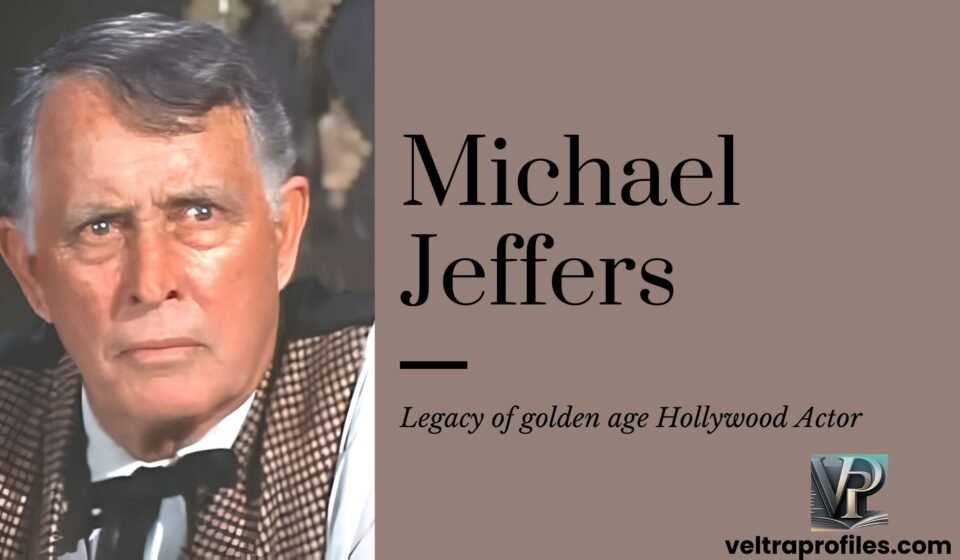

Some careers last five years. Some last fifteen. Then there are careers like Michael Jeffers, which lasted exactly fifty years, spanned two continents, two world wars, a communist witch hunt, a landmark labor rights battle, and over six hundred individual screen appearances alongside virtually every major star Hollywood produced between the 1930s and the 1980s. Born in Lancashire, England in 1898 and trained at the Royal Academy of Dramatic Arts, he crossed the Atlantic after World War I, built a reputation as a leading man on Broadway, and then transformed himself into one of the most prolific and quietly indispensable supporting players in the entire history of American cinema.
Most people don’t recognize his name. But here’s what’s fascinating: almost everyone who loves classic films has seen michael jeffers on screen without ever knowing it. He appears in Chinatown, To Kill a Mockingbird, High Noon, Witness for the Prosecution, and The Man Who Shot Liberty Valance. He shared sets with Laurel and Hardy, Jack Nicholson, Gregory Peck, and The Three Stooges. He served as president of the Screen Extras Guild, halted Hollywood production for a full twenty-four hours in protest, fought a communist blacklisting campaign in court for eight years, taught at the Pasadena Playhouse, modeled commercially for the Forbes Agency, and co-founded the Canyon Theatre Guild. That isn’t a footnote in film history. That’s a genuinely extraordinary life.
Who Was Michael Jeffers?
Michael Jeffers was a British-born American actor whose career stands as one of the most remarkable examples of sustained professional dedication in the entire history of Golden Age Hollywood. Born Michael Dennis Jeffers on March 10, 1898 in Lancashire, England, he accumulated over 600 screen credits across a fifty-year career spanning from his Hollywood debut in 1933 through to his final appearance in 1983. He worked in film and television alongside legends including Laurel and Hardy, Jack Nicholson, Gregory Peck, James Stewart, and virtually every major performer who passed through the Hollywood studio system across five decades of continuous professional work.
Read more: /matthew-brooks-biography/
What made michael jeffers genuinely distinctive wasn’t simply the volume of his credits but the extraordinary breadth of the productions he appeared in. His filmography spans some of the most celebrated and enduringly relevant films in American cinema history. It also encompasses his remarkable off-screen legacy as a labor rights activist, theatrical educator, community organizer, and charitable contributor whose influence on the Hollywood working-actor community went far beyond anything visible on screen. He died on May 8, 1990 in Volusia County, Florida at the age of 92, having outlived most of his contemporaries and witnessed the complete transformation of the industry he had spent a lifetime serving.
Quick Bio info
| Field | Detail |
|---|---|
| Full Name | Michael Dennis Jeffers |
| Nickname | Not publicly documented |
| Gender | Male |
| Date of Birth | March 10, 1898 |
| Age | Died at age 92 (not applicable — deceased) |
| Birthplace | Lancashire, England, UK |
| Hometown | Lancashire, England, UK |
| Current Residence | Divided his time between homes in Florida and California following his 1983 retirement; passed away on May 8, 1990, in Volusia County, Florida, USA |
| Nationality | British by birth, and became a naturalized United States citizen |
| Ethnicity | Not publicly documented (British/English heritage) |
| Religion | Regular parishioner of the Catholic church |
| Education / Qualification | Earned a degree in theatrical arts from the Royal Academy in England |
| Profession | Actor, known as one of the most prolific and active bit players during the Golden Age of Hollywood |
| Languages Spoken | English (confirmed) — others not publicly documented |
| Hobbies & Interests | Theatre, civic and charitable organizing — served on the board of directors for the Screen Extras Guild, was a founding member of the Canyon Theatre Guild, and was a theatrical instructor at the Pasadena Playhouse |
| Marital Status | Not publicly documented |
Personal information
Full Name
Michael Dennis Jeffers is his full name.
Nickname
No public nickname has been documented for him.
Gender
He is male.
Date of Birth
He was born on March 10, 1898.
Age
He passed away at age 92.
Birthplace
He was born in Lancashire, England, UK.
Hometown
His hometown is Lancashire, England, UK.
Current Residence
He divided his time between homes in Florida and California following his 1983 retirement, and passed away on May 8, 1990, in Volusia County, Florida, USA.
Nationality
He was British by birth and became a naturalized United States citizen.
Ethnicity
He was of British/English heritage.
Religion
He was a regular parishioner of the Catholic church.
Education / Qualification
He earned a degree in theatrical arts from the Royal Academy in England.
Profession
He worked as an actor, known as one of the most prolific and active bit players during the Golden Age of Hollywood.
Languages Spoken
He was confirmed to speak English; other languages are not publicly documented.
Hobbies & Interests
He was involved in theatre and civic and charitable organizing — he served on the board of directors for the Screen Extras Guild, was a founding member of the Canyon Theatre Guild, and worked as a theatrical instructor at the Pasadena Playhouse.
Marital Status
His marital status has not been publicly documented.
Physical appearance
Height (Feet/Inches)
He stood 5 feet 7 inches tall.
Height (cm)
His height was 170 cm.
Weight (kg)
He weighed 80 kg.
Weight (lbs)
His weight was 176 lbs.
Eye Color
His eyes were grey.
Hair Color
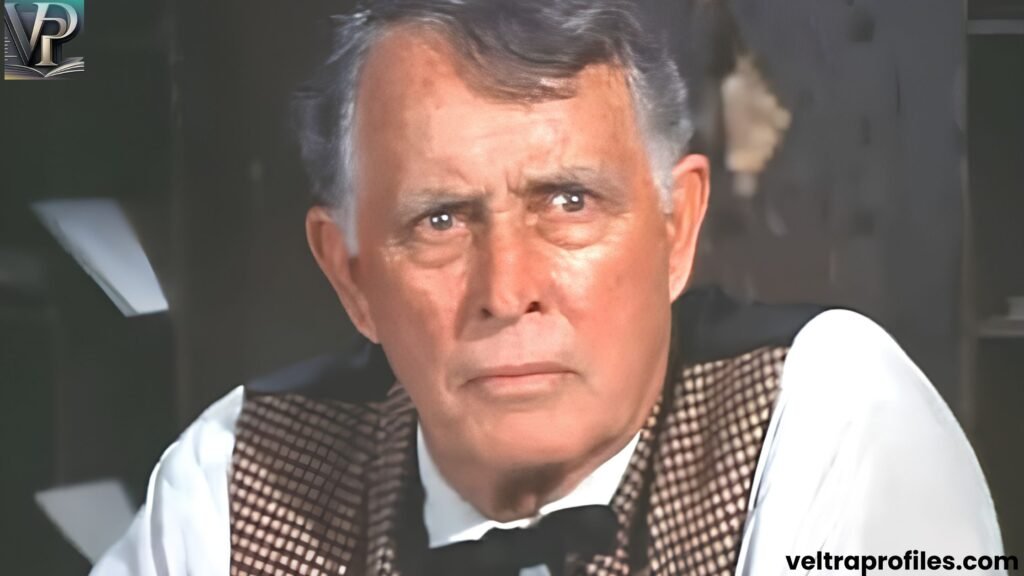
He was described as having dark good looks.
Body Type
He was described as having a slim physique.
Skin Tone
His skin tone was fair.
Early Life in Lancashire England and Royal Academy Training
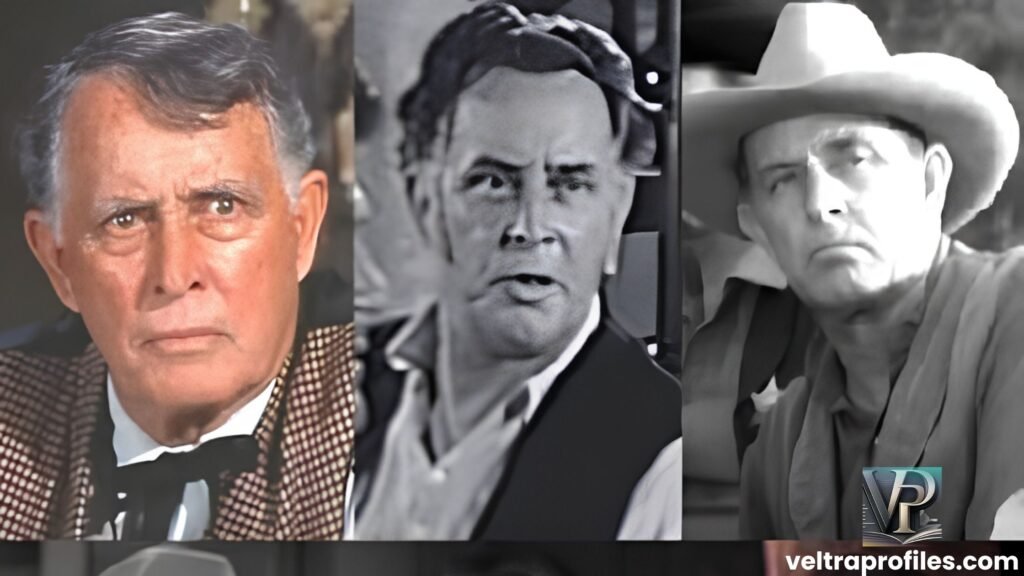
Lancashire, England in the late Victorian and Edwardian era was a place shaped by industry, community, and a specific northern English cultural identity that valued hard work, directness, and genuine self-expression over affected elegance. Growing up there at the turn of the twentieth century meant absorbing a culture where performance traditions ran deep through music halls, amateur theater, and the specific comedic sensibility of northern English entertainment that had produced some of Britain’s most beloved performers across generations. Michael Jeffers was born into this environment on March 10, 1898 and whatever sparked his theatrical ambitions in those early years, the specific character of Lancashire culture clearly contributed something lasting and fundamental to the professional identity he would spend the next nine decades building.
His path toward formal theatrical training led him to the Royal Academy of Dramatic Arts, the most prestigious acting conservatory in Britain and one of the most respected in the entire world. Earning a degree in theatrical arts from the Royal Academy during the early years of the twentieth century wasn’t simply a credential. It was an immersion into the complete traditions of British stage performance including voice training, physical technique, classical text analysis, and the specific discipline of professional theatrical craft that the Royal Academy had been developing and refining since its founding in 1904. For a young man from Lancashire with genuine talent and serious ambition, the Royal Academy provided exactly the rigorous foundation that a lasting professional career required.
Lancashire Roots and the Making of a Character
The specific influence of Lancashire on Michael Jeffers’s professional character shows up most clearly in the combination of qualities that defined his career: absolute reliability, physical distinctiveness, genuine craft, and a willingness to serve the production rather than seek personal prominence. These are northern English working values applied to the theatrical profession and they explain why directors called him back production after production across fifty years.
He wasn’t flashy. He wasn’t difficult. He showed up, knew his material, delivered precisely what the scene required, and made every production around him marginally better through the consistent professionalism of his contribution. That’s the Lancashire character expressed through Royal Academy trained technique and it proved to be an extraordinarily durable professional combination across a career of remarkable length and quality.
Michael Jeffers on Broadway — New York City Leading Man
The end of World War I brought Michael Jeffers across the Atlantic to New York City as part of the wave of European talent that found its way to American shores during the cultural ferment of the early 1920s. What he found in New York was an extraordinary theatrical landscape. Michael Jeffers established himself within this landscape as a leading man, an achievement that speaks directly to the quality of his Royal Academy training and the specific combination of dark good looks, slim physique, and articulate voice that made him visually and aurally compelling on stage.
His Broadway years gave him something invaluable for his subsequent film career. Stage performance at the professional level demands a completely different relationship to the audience than film acting does. The voice must carry, the physical presence must read from the back of the house, and the technical demands of eight performances a week require a stamina and consistency that film production never requires from any single performer. Michael Jeffers mastered all of these demands during his New York City leading man years and the technical discipline those demands installed in him as a performer would prove directly relevant when he eventually made the transition to Hollywood film work in the early 1930s.
The specific qualities that made Michael Jeffers a successful Broadway leading man translated naturally into the film work that followed his Hollywood discovery. His articulate voice was precisely the quality that the transition from silent films to talkies had made suddenly and acutely valuable in the early 1930s. Many silent film stars struggled painfully with the transition to sound because their vocal training was inadequate for the microphone’s demands. Michael Jeffers, trained at the Royal Academy and seasoned by years of Broadway stage performance, had no such problem. His voice was an instrument that had been rigorously developed across years of professional theatrical work and it served him as reliably in front of a camera microphone as it had from a stage in front of a packed Broadway house.
Physical Appearance
| Field | Detail |
|---|---|
| Height (Feet/Inches) | 5 feet 7 inches |
| Height (cm) | 170cm |
| Weight (kg) | 80kg |
| Weight (lbs) | 176lbs |
| Eye Color | Grey |
| Hair Color | Described as having dark good looks |
| Body Type | Described as having a slim physique |
| Skin Tone | Fair |
Hollywood Discovery at Radio City Music Hall — William A. Seiter
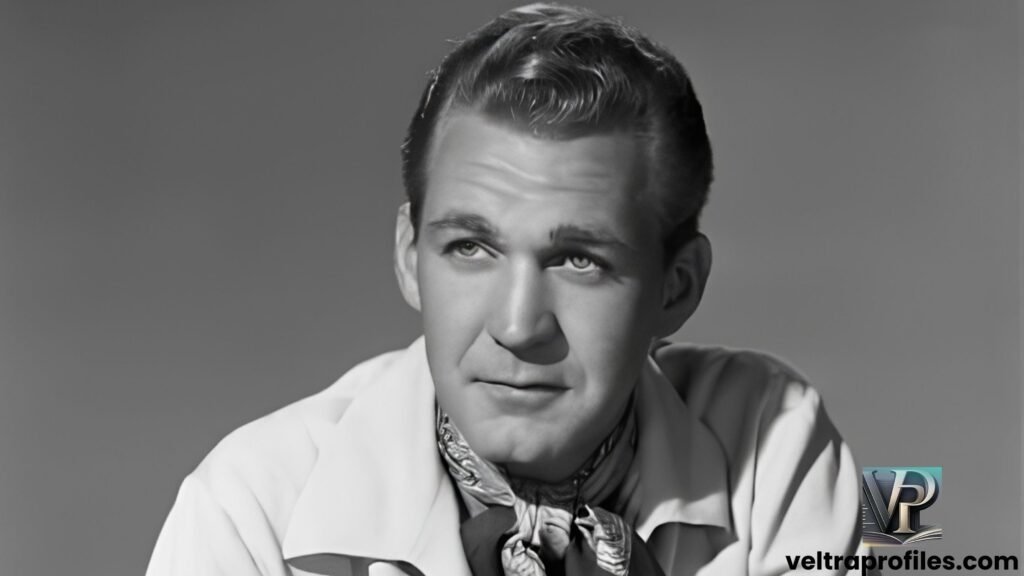
The story of how Michael Jeffers made his transition from Broadway stage actor to Hollywood film performer has the quality of a perfectly constructed Hollywood narrative. He was attending a social function at the prestigious Radio City Music Hall when he was introduced to director William A. Seiter, a prolific and respected Hollywood filmmaker who had been directing films since the silent era and would go on to direct over a hundred productions across his career. Seiter was immediately struck by what he saw: the dark good looks, the slim physique, and the articulate voice that Michael Jeffers carried with him from his Lancashire upbringing and Royal Academy training through his Broadway years. Impressed by the complete package that Jeffers presented, Seiter arranged for him to relocate to California and begin a career in the film industry.
That introduction at Radio City Music Hall represents one of those pivotal moments that biography tends to reduce to a single sentence but that actually compressed an enormous amount of professional assessment and personal calculation into what was probably a relatively brief encounter. William A. Seiter was an experienced Hollywood director who had seen hundreds of performers and understood exactly what the camera would and wouldn’t reward. His decision to actively recruit Michael Jeffers and arrange his relocation to California reflects genuine professional judgment rather than casual social enthusiasm. He saw something specific in Jeffers that he needed for a specific production and he acted on that assessment with the decisiveness that professional film directors develop from years of making rapid casting decisions under commercial pressure.
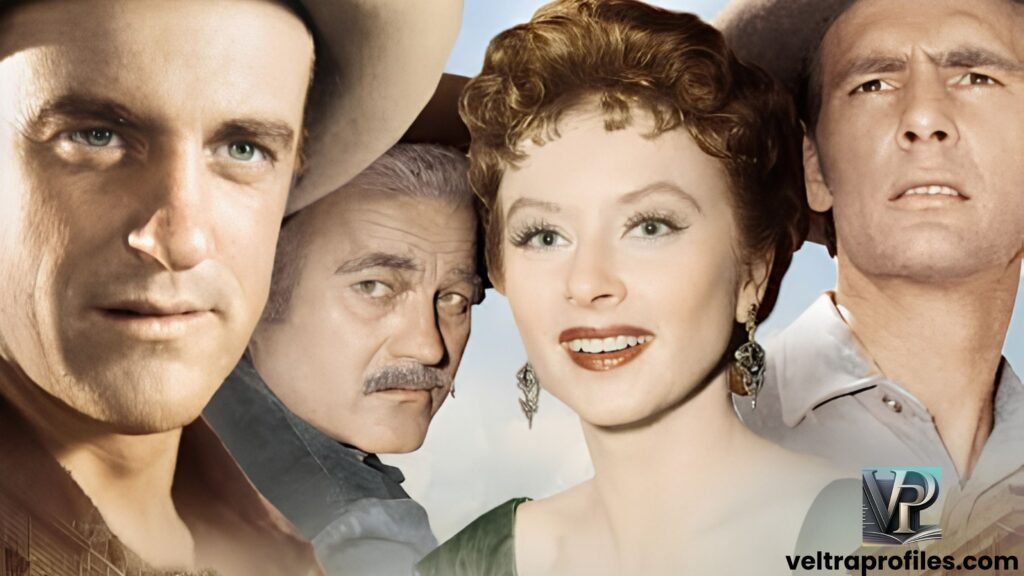
William A. Seiter directed Sons of the Desert (1933) for Hal Roach Studios with distribution through Metro-Goldwyn-Mayer, starring Stan Laurel and Oliver Hardy in what would become one of the most beloved Laurel and Hardy features ever made. His decision to cast Michael Jeffers in this production placed a Royal Academy trained Broadway leading man into one of the most commercially and artistically successful comedy films of the early sound era. That first credit alongside Laurel and Hardy immediately established Michael Jeffers within the Hollywood community as a reliable, skilled, and physically distinctive supporting player whose work complemented rather than competed with the performers around him. That reputation would sustain him across the following fifty years of continuous professional work.
Michael Jeffers Debuts in Sons of the Desert 1933 With Laurel and Hardy
Sons of the Desert (1933) holds a specific place in cinema history that goes well beyond its considerable entertainment value. Released on December 29, 1933 by Metro-Goldwyn-Mayer and produced by Hal Roach, the film is widely considered one of the greatest Laurel and Hardy features ever made and its cultural legacy is so enduring that the international Laurel and Hardy fan appreciation society took its name directly from this film. The story follows Stan Laurel and Oliver Hardy as devoted members of a fraternal lodge called the Sons of the Desert who scheme to attend a convention in Chicago despite their wives’ objections by faking an illness requiring a Hawaiian cruise. Everything goes spectacularly wrong in the specific Laurel and Hardy fashion that made their comic partnership one of the most beloved in the history of cinema.
Michael Jeffers made his Hollywood debut within this production under the direct supervision of William A. Seiter who had recruited him specifically for the film. Sharing a set with Stan Laurel and Oliver Hardy at the beginning of a film career was an extraordinary professional introduction to Hollywood standards and expectations. Both comedians were consummate professionals whose working methods had been refined across more than a hundred film collaborations and whose understanding of comic timing, physical performance, and audience psychology was among the most sophisticated in the industry. Absorbing those professional standards from the very beginning of his film career gave michael jeffers a foundation that most supporting players took years of gradual exposure to accumulate.
| Detail | Information |
|---|---|
| Film Title | Sons of the Desert |
| Release Date | December 29, 1933 |
| Director | William A. Seiter |
| Producer | Hal Roach |
| Studio | Hal Roach Studios |
| Distributor | Metro-Goldwyn-Mayer |
| Stars | Stan Laurel, Oliver Hardy, Charley Chase |
| Running Time | 64 minutes |
| Genre | Pre-Code comedy |
| Legacy | Inspired the international Laurel and Hardy fan society |
| Michael Jeffers role | Supporting cast — under William A. Seiter’s supervision |
Michael Jeffers and the Three Stooges — Classic Comedy Connections
Beyond his debut with Laurel and Hardy, Michael Jeffers also appeared in multiple productions connected to The Three Stooges, another of Hollywood’s most beloved classic comedy institutions. His credits within Three Stooges productions include Paul Revere Jr. (1933), So Long Mr. Chumps (1941), and The Strange Case of Dr. Rx (1942), spanning a decade of his career and demonstrating that his value within the specific ecosystem of classic Hollywood comedy wasn’t limited to a single famous production or a single comedic partnership.
The Three Stooges films operated within a specific production culture at Columbia Pictures that was fast-paced, technically demanding, and relentlessly focused on comic efficiency. Working within that production environment across multiple productions required a specific kind of professional adaptability, the ability to understand the comedic requirements of a scene immediately, deliver precisely what was needed without over-reaching, and move on to the next setup with the speed that short comedy film production always demanded. Michael Jeffers clearly possessed all of these qualities in abundance and his repeated appearances across Three Stooges productions confirm that the comedy unit’s production team considered him a reliable and valued professional contributor across the decade those credits span.
| Year | Title | Connection |
|---|---|---|
| 1933 | Paul Revere Jr. | Early Three Stooges production |
| 1941 | So Long Mr. Chumps | Mid-career Three Stooges credit |
| 1942 | The Strange Case of Dr. Rx | Three Stooges connected production |
Michael Jeffers as Screen Extras Guild President — The 1945 Hollywood Strike
The most dramatically significant chapter in the off-screen life of michael jeffers involves his role as president of the Screen Extras Guild and the landmark labor actions he led during 1945 and 1946 that placed him permanently in the history of Hollywood labor rights. The specific grievance driving the 1945 protest was concrete and justified. Stuntmen and bit part actors were obtaining extra work while genuine extras were not receiving comparable access to bit part or stunt opportunities. Michael Jeffers took this inequity to the logical extreme of labor protest and halted production of movies across Hollywood for a full twenty-four-hour period. That kind of decisive industrial action requires both personal courage and genuine organizational leadership and he demonstrated both qualities unambiguously in that moment.
The 1946 protest followed as a continuation of the same advocacy and confirmed that the 1945 action wasn’t a single impulsive gesture but part of a sustained campaign to secure fair treatment for the workers he represented. While serving as the bargaining agent for the Screen Extras Guild he was openly described as a thorn in the side of the Screen Actors Guild, a characterization that he earned by consistently and forcefully advocating for his members’ interests even when those interests put him in direct conflict with a more powerful and better-resourced organization. His lawsuit challenging the restricted voting rights that Screen Extras Guild members held within the broader industry guild structure reflects the same combination of principled conviction and tactical intelligence that characterized all of his advocacy work throughout this period.
The twenty-four-hour production halt that Michael Jeffers organized in 1945 represented something historically significant within the specific context of Hollywood labor history. Extras and background performers occupied the most economically vulnerable position in the entire studio system. They worked without the contractual protections that guild membership provided to more prominent performers, received minimal compensation, and had virtually no leverage against the studios that employed them on a day-to-day basis without commitment or obligation. Michael Jeffers used his position as Screen Extras Guild president to change that equation by demonstrating that organized collective action by extras could actually stop production and cost studios real money. That demonstration of power was the essential first step toward securing the recognition and rights that extras had been denied across the preceding decades of the studio system’s operation.
The Communist Blacklisting — Michael Jeffers’s Fight for Justice 1950 to 1958
The communist blacklisting that followed Michael Jeffers’s labor activism represents one of the most unjust and genuinely infuriating chapters in his biography. After being informed that Screen Extras Guild members held restricted voting rights and responding by suing to challenge that restriction, a letter was circulated within the industry suggesting he had communist ties and was attempting to drive a wedge within the Screen Extras Guild. The specific malice of this accusation is worth stating clearly. He wasn’t accused of communist sympathies because anyone genuinely believed he held communist beliefs. He was accused because the accusation was an effective weapon for silencing an inconvenient labor advocate in an era when the Red Scare made such accusations professionally devastating.
The consequences were immediate and severe. He received little work as a result of the letter’s circulation and the professional isolation it created. For an actor whose livelihood depended entirely on being hired, having letters circulate within the hiring community suggesting communist ties was functionally equivalent to a career sentence. He refused to accept that sentence quietly. Instead he fought in court from 1950 to 1958, eight full years of legal battle aimed at restoring his name, recovering the wages he had lost as a direct result of the letter, and establishing that what had been done to him was both wrong and legally actionable. That eight-year legal fight required a specific kind of sustained courage and financial sacrifice that most people confronting institutional power simply cannot maintain and Michael Jeffers maintained it completely.
| Year | Event |
|---|---|
| 1945 | Led 24-hour Hollywood production halt as SEG president |
| 1946 | Led further protest on behalf of extras’ rights |
| Post-1946 | Sued to restore voting rights for SEG members |
| Post-lawsuit | Letter circulated suggesting communist ties |
| 1950 | Began court battle to restore name and recover lost wages |
| 1958 | Eight-year court battle concluded |
| Post-1958 | Gradually resumed professional work in television westerns |
Michael Jeffers in Classic Hollywood Films — Chinatown to High Noon
The film credits that michael jeffers accumulated across his career connect him to some of the most celebrated and enduringly significant productions in the history of American cinema. His appearance in Chinatown (1974) directed by Roman Polanski and starring Jack Nicholson and Faye Dunaway places him within what many critics and film historians consider the greatest American film noir ever made. Chinatown isn’t just a great film. It’s a film that fundamentally changed how Hollywood understood the relationship between genre, character, and moral complexity and its cultural influence continues to shape filmmaking decades after its original release.
His appearance in To Kill a Mockingbird (1962) starring Gregory Peck as Atticus Finch connects him to one of the most morally significant and widely beloved films in American cinema history, a production that won three Academy Awards including Best Actor for Gregory Peck’s iconic performance. High Noon (1952) starring Gary Cooper is another Academy Award winning classic western whose cultural footprint rivals any film of its era. Witness for the Prosecution (1957) directed by Billy Wilder is among the most clever and entertaining courtroom dramas ever filmed. The Man Who Shot Liberty Valance (1962) directed by John Ford and starring James Stewart and John Wayne is widely regarded as one of the greatest westerns in the history of the genre. Being present in any one of these productions would constitute a meaningful filmography. Michael Jeffers appeared in all of them.
| Film | Year | Director | Lead Stars |
|---|---|---|---|
| Sons of the Desert | 1933 | William A. Seiter | Stan Laurel, Oliver Hardy |
| High Noon | 1952 | Fred Zinnemann | Gary Cooper |
| Witness for the Prosecution | 1957 | Billy Wilder | Charles Laughton, Tyrone Power |
| To Kill a Mockingbird | 1962 | Robert Mulligan | Gregory Peck |
| The Man Who Shot Liberty Valance | 1962 | John Ford | James Stewart, John Wayne |
| River of No Return | 1954 | Otto Preminger | Marilyn Monroe, Robert Mitchum |
| The Big Heat | 1953 | Fritz Lang | Glenn Ford |
| The Way We Were | 1973 | Sydney Pollack | Barbra Streisand, Robert Redford |
| Hello Dolly | 1969 | Gene Kelly | Barbra Streisand |
| The Ghost and Mr Chicken | 1966 | Alan Rafkin | Don Knotts |
| Paradise Alley | 1978 | Sylvester Stallone | Sylvester Stallone |
| Chinatown | 1974 | Roman Polanski | Jack Nicholson, Faye Dunaway |
| The Sting II | 1983 | Jeremy Paul Kagan | Jackie Gleason |
Michael Jeffers in Western Television — Gunsmoke and Wyatt Earp
The explosion of western television drama during the 1950s and 1960s created an enormous and sustained demand for experienced character actors who could deliver reliable supporting performances within the fast-paced production schedules that weekly television drama required. Michael Jeffers was ideally positioned to benefit from this demand. His physical type, lean and weathered with a voice that carried natural authority, suited the western genre perfectly and his decades of professional experience made him the kind of performer that production teams could trust to deliver usable performances quickly and consistently without requiring extensive directorial attention.
Gunsmoke represents one of the most significant and culturally enduring western television series in American broadcast history, running from 1955 to 1975 across twenty seasons and 635 episodes making it the longest-running scripted primetime American television series in history. The Life and Legend of Wyatt Earp holds its own historical distinction as the first adult western television drama in American broadcast history, premiering on ABC on September 6, 1955 and running through 1961 across 229 episodes. Michael Jeffers appeared in both of these landmark productions across a period spanning from 1955 to 1960, connecting him to the defining western television series of the decade and to the specific production culture of an era when western drama dominated the American primetime landscape.
| Show | Network | Years | Significance |
|---|---|---|---|
| Gunsmoke | CBS | From 1955 | Longest-running scripted primetime series — 635 episodes |
| The Life and Legend of Wyatt Earp | ABC | 1955 — 1960 | First adult western TV drama in American history |
| Quincy ME | NBC | Later career | Late career television credit |
Michael Jeffers at the Pasadena Playhouse — Theatrical Instructor and Mentor
Beyond his screen career and labor activism, Michael Jeffers invested sustained time and energy in giving back to the theatrical community through teaching at the Pasadena Playhouse, one of the most respected theatrical institutions in California and a training ground that shaped the early careers of an extraordinary number of significant American performers across the twentieth century. Teaching at the Pasadena Playhouse wasn’t a retirement activity or a casual side engagement. It was a serious professional commitment that placed him in direct pedagogical relationship with developing performers who were attempting to build the same kind of career he had built across his own professional lifetime.
The specific knowledge that Michael Jeffers brought to his teaching role at the Pasadena Playhouse was irreplaceable. He had trained at the Royal Academy of Dramatic Arts. He had performed as a leading man on Broadway. He had worked in Hollywood film production across fifty years alongside virtually every major director and performer the industry produced during that period.
The Pasadena Playhouse has been designated the State Theater of California and holds a reputation as one of the most important theatrical institutions in the western United States. Its alumni include Dustin Hoffman, Gene Hackman, Charles Bronson, Raymond Burr, and dozens of other performers who went on to significant film and television careers. Teaching at this institution placed Michael Jeffers within a tradition of theatrical education at the highest level available in California and his contribution to that tradition, bringing fifty years of professional experience directly to developing performers, represents a form of legacy that extends beyond his own screen credits into the careers of every student he taught and influenced during his time on the Playhouse faculty.
Michael Jeffers as a Commercial Model — Forbes Agency
The commercial modeling work that Michael Jeffers did for the Forbes Agency adds an unexpected and genuinely interesting dimension to a professional biography already remarkable for its variety and range. Commercial modeling in the mid-twentieth century required a specific combination of physical qualities and professional discipline that overlapped naturally with the skills of an experienced film actor. The Forbes Agency represented professional commercial talent and its clients expected the kind of reliable, camera-ready performance that Michael Jeffers had been delivering to film and television directors across his entire career.
His physical description, dark good looks, slim physique, and articulate voice, translated naturally from stage and screen into the specific visual language of commercial modeling. The fact that he maintained an active modeling career alongside his film and television work reflects both the breadth of his professional engagement with the entertainment and commercial arts industry and the sustained physical vitality that his slim physique and active professional lifestyle supported across his long career. This modeling connection also speaks to his commercial instincts, an actor who understood that professional visibility in multiple formats maintained the kind of industry presence that sustained careers in the competitive Hollywood market.
Michael Jeffers Complete Filmography — Over 600 Credits
The complete professional filmography of michael jeffers across over 600 credits represents one of the most extraordinary volumes of screen work accumulated by any supporting player in the history of Hollywood. Looking at the full span of his career from his 1933 debut through his 1983 finale reveals a performer who worked continuously and productively across every major shift in the American entertainment industry across five decades. He worked in the early sound era, the Golden Age studio system, the television transition of the 1950s, the independent film movement of the 1960s and 1970s, and the late career productions of the early 1980s. Each era made different demands and he met every one of them.
The specific range of genres represented in his filmography is equally remarkable. Classic comedies with Laurel and Hardy and The Three Stooges. Award-winning dramas including To Kill a Mockingbird and Chinatown. Beloved westerns including High Noon and The Man Who Shot Liberty Valance. Courtroom thrillers including Witness for the Prosecution. Musical films including Hello Dolly. Horror comedies including The Ghost and Mr. Chicken. Television westerns spanning Gunsmoke and The Life and Legend of Wyatt Earp. Medical dramas including Quincy ME. Crime films including Paradise Alley. And the conclusion of a fifty-year career with The Sting II in 1983. That breadth of genre engagement across that length of career is genuinely without parallel among supporting players of his specific era.
| Decade | Key Productions | Genre |
|---|---|---|
| 1930s | Sons of the Desert, Paul Revere Jr., Three Stooges shorts | Comedy |
| 1940s | So Long Mr. Chumps, The Strange Case of Dr. Rx | Comedy |
| 1950s | High Noon, River of No Return, The Big Heat, Gunsmoke, Wyatt Earp | Drama, Western |
| 1960s | To Kill a Mockingbird, The Man Who Shot Liberty Valance, Witness for the Prosecution, The Ghost and Mr. Chicken, Hello Dolly | Drama, Western, Comedy |
| 1970s | Chinatown, The Way We Were, Those Mad Mad Moviemakers, Paradise Alley | Drama, Comedy |
| 1980s | The Sting II (final credit) | Drama |
Michael Jeffers Charitable Work, Community Legacy, and Final Years
The off-screen legacy of michael jeffers extends well beyond his labor activism and his film career into a pattern of sustained charitable and community engagement that defines the full human dimensions of an extraordinary life. He presided on local charters of both the American Red Cross and St. Jude’s Children’s Research Hospital, two of the most respected and impactful charitable organizations in American life. His involvement with St. Jude’s in particular carries special resonance given that institution’s specific focus on children with catastrophic illnesses and the consistent message of hope and medical commitment it has carried across its history since founder Danny Thomas established it in 1962.
He was also one of the many founding members of the Canyon Theatre Guild, contributing to the establishment of a community theatrical organization from its very beginning rather than simply lending his name to an existing institution. Founding members of theatrical community organizations shape the culture, values, and artistic direction of those organizations in ways that later supporters simply cannot and his involvement from the foundation stage reflects a genuine commitment to community theater as a living cultural institution rather than simply a credential to add to a biographical profile. His involvement with the Hollywood Democratic Committee demonstrated political engagement alongside his professional life. His sustained support of the Motion Picture and Television Fund, which provides assistance to entertainment industry workers in need, connected his charitable giving directly to the professional community he had served across his entire career. He followed his 1983 retirement by spending his remaining years between his homes in Florida and California engaged in the charitable and religious causes that had defined his values throughout his professional life.
FAQs About Michael Jeffers
Who was Michael Jeffers?
Michael Jeffers was a British-born American actor born Michael Dennis Jeffers on March 10, 1898 in Lancashire, England who accumulated over 600 screen credits across a fifty-year career from 1933 to 1983. He is recognized as one of the most prolific bit players of the Golden Age of Hollywood, as president of the Screen Extras Guild who halted production in 1945, and as a survivor of the communist blacklisting campaign who fought for justice in court from 1950 to 1958.
What was Michael Jeffers most famous for?
His most historically significant role was as president of the Screen Extras Guild who organized a twenty-four-hour Hollywood production halt in 1945 to protest the exclusion of extras from stunt and bit part work. His most famous film debut was in Sons of the Desert (1933) with Laurel and Hardy under director William A. Seiter. His most culturally significant film credits include Chinatown, To Kill a Mockingbird, and High Noon.
When did Michael Jeffers die?
Michael Jeffers died on May 8, 1990 in Volusia County, Florida at the age of 92 following his 1983 retirement from professional acting.
How many film credits did Michael Jeffers have?
Over 600 confirmed screen credits across a fifty-year career spanning 1933 to 1983 making him one of the most prolific supporting players in the entire history of Hollywood.
Was Michael Jeffers really blacklisted as a communist?
He was falsely accused of communist ties through a letter circulated within the industry following his labor activism as Screen Extras Guild president. He fought this accusation in court from 1950 to 1958 to restore his professional reputation and recover lost wages demonstrating that the accusation was professionally motivated rather than factually grounded.
Where was Michael Jeffers born?
Michael Dennis Jeffers was born on March 10, 1898 in Lancashire, England, UK and later became a naturalized United States citizen following his immigration to America after World War I.
Conclusion
The complete story of michael jeffers is one of the most genuinely extraordinary in the entire history of American entertainment. He came from Lancashire, England, trained at the Royal Academy of Dramatic Arts, crossed the Atlantic after World War I, built a Broadway career as a leading man, was discovered at Radio City Music Hall by director William A. Seiter, debuted in Hollywood alongside Laurel and Hardy in one of the most beloved comedies of the early sound era, and then spent fifty continuous years appearing in over six hundred productions connecting him to virtually every major director and performer in the history of Golden Age Hollywood.
Off screen he was braver and more principled than most people ever have occasion to demonstrate. He halted Hollywood production for twenty-four hours to fight for extras’ rights. He sued for voting rights on behalf of the workers he represented. He fought a communist blacklisting smear campaign in court for eight years rather than accepting an unjust professional death sentence without resistance. He taught at the Pasadena Playhouse. He co-founded the Canyon Theatre Guild. He supported the American Red Cross and St. Jude’s Children’s Research Hospital. He lived to ninety-two, retired with dignity between Florida and California, and left behind a legacy that is simultaneously a film history, a labor rights story, a community builder’s biography, and a deeply human story of courage, craft, and commitment to something larger than personal success. Michael Jeffers deserved to be famous. He was something better. He was genuinely good at everything that mattered.