


Most theatergoers leave a show talking about the actors, the songs, or the script. Almost nobody walks out humming the lighting cues. Yet without a designer like Lap Chi Chu quietly shaping every shadow and color wash, none of those performances would land the way they do. He’s spent nearly three decades working in near-total public anonymity, despite lighting some of the most acclaimed productions in contemporary American theater.
That changed, at least a little, in 2023, when Chu earned a Tony nomination for his work on the Broadway revival of Camelot, a milestone arriving after roughly thirty years of steady, dedicated Off-Broadway and regional work. This article traces his complete journey, from a science-minded teenager in Boston who stumbled into a high school theater class, through his formal training at Northwestern and NYU, all the way to his current dual life as a working Broadway designer and Head of Lighting Design at UCLA. Along the way, you’ll find real production credits, direct quotes from industry interviews, and a genuine look at what it actually takes to build a career in one of theater’s most technically demanding, least visible disciplines.
Who Is Lap Chi Chu?
Lap Chi Chu is an American lighting designer based between New York and Los Angeles, known for his extensive work across Broadway, Off-Broadway, and major regional theaters nationwide. He holds a Bachelor of Science from Northwestern University and a Master of Fine Arts from New York University, credentials that reflect the unusual blend of technical and artistic training required for serious lighting design work.
Read more: /nancy-lemenager-biography/
His professional credits span decades and include Camelot, Suffs, Mlima’s Tale, Uncle Vanya, The Coast Starlight, The Wolves, Morning Sun, and 72 Miles to Go…, alongside long-term collaborations with institutions including The Public Theater, New York Theatre Workshop, Signature Theatre, Roundabout Theatre Company, Lincoln Center Theater, Geffen Playhouse, Oregon Shakespeare Festival, Berkeley Repertory Theatre, the Goodman Theatre, and Shakespeare Theatre Company. Beyond his design career, he serves as Head of Lighting Design at the UCLA School of Theater, Film and Television, a role he assumed in 2020 after nineteen years teaching at California Institute of the Arts. His award history includes a Tony nomination, an Obie Award, a Lucille Lortel Award, an Ovation Award, and recognition from the Los Angeles Drama Critics Circle, a collection that places him among the most consistently honored lighting designers currently working in American theater.

Quick Bio info
| Field | Detail |
|---|---|
| Full Name | Lap Chi Chu |
| Nickname | Not publicly documented |
| Gender | Male |
| Date of Birth | March 23,1975 |
| Age | 51 years old |
| Birthplace | Boston, Massachusetts, USA (born just outside Boston) |
| Hometown | Raised primarily in Hong Kong (his parents moved him there shortly after birth) and later completed K–12 schooling back in the Boston area |
| Current Residence | Based between New York City and Los Angeles |
| Nationality | American |
| Ethnicity | Chinese American (parents were from Hong Kong and Macao) |
| Religion | Not publicly documented |
| Education / Qualification | B.S. from Northwestern University (originally a chemistry major before switching to theater); M.F.A. from New York University |
| Profession | Lighting designer and professor — Head of Lighting Design at the UCLA School of Theater, Film and Television |
| Languages Spoken | English (his second language, as Chinese was spoken at home growing up in Hong Kong) |
| Hobbies & Interests | Theater, lighting design, teaching the next generation of designers |
| Marital Status | Married |
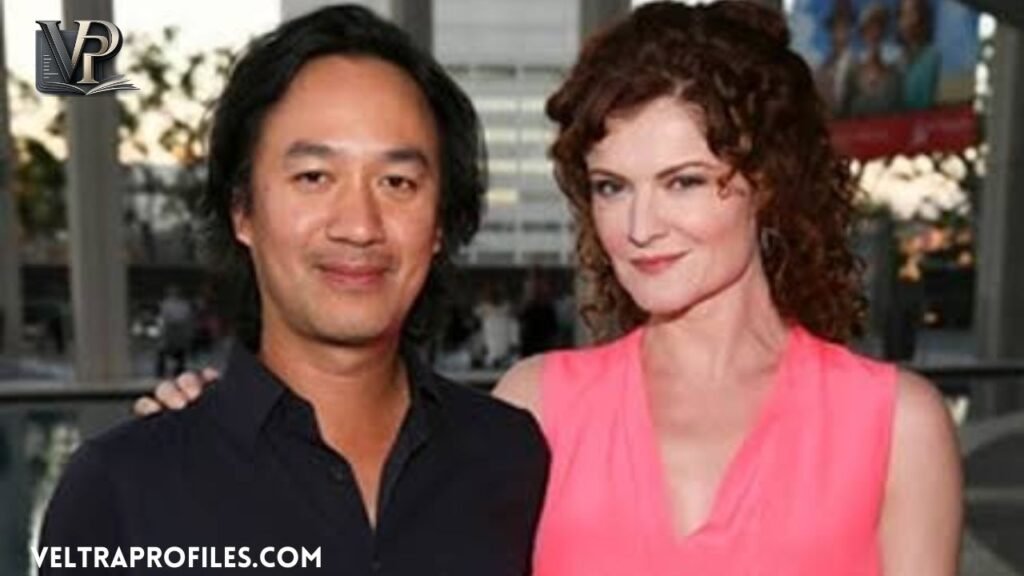
| Spouse / Partner | Married actress Rebecca Wisocky in Boston on October 10, 2015 |
Personal information
Full Name
His full name is Lap Chi Chu.
Nickname
No publicly known nickname has been documented for him.
Gender
Lap Chi Chu is male.
Date of Birth
He was born on March 23, 1975.
Age
He is 51 years old as of 2026.
Birthplace
He was born just outside Boston, Massachusetts, USA.
Hometown
He grew up mainly in Hong Kong and later completed his K–12 education in the Boston area.
Current Residence
He is based between New York City and Los Angeles.
Nationality
He is American.
Ethnicity
He is Chinese American, with family roots in Hong Kong and Macao.
Religion
His religion has not been publicly documented.
Education
He earned a B.S. from Northwestern University. He first studied chemistry before changing his major to theater.
Master’s Degree
He earned an M.F.A. from New York University.
Career
He is a lighting designer and professor who works in theater and education.
Academic Position
He is the Head of Lighting Design at UCLA’s School of Theater, Film and Television.
Languages
English is his second language. Chinese was spoken at home while he was growing up in Hong Kong.
Hobbies and Interests
His main interests include theater, lighting design, and teaching future designers.
Marital Status
He is married.
Spouse
He is married to actress Rebecca Wisocky. They married in Boston on October 10, 2015.
Physical Appearance
Height
He is approximately 5 feet 9 inches (175 cm) tall.
Weight
His listed weight is about 70 kg (154 lbs).
Eye Color
His eye color is black.
Hair Color
His hair color is black.
Body Type
He has a healthy body type.
Skin Tone
His skin tone is described as fair.
From Boston Science Kid to Theater Convert: Lap Chi Chu’s Early Life
Lap Chi Chu grew up in Boston, Massachusetts, and by his own account, spent much of his youth assuming he’d eventually pursue a career in the sciences. Chemistry and computer science came naturally to him, and that early aptitude pointed toward a fairly conventional, technically oriented career path, one with no obvious connection to theater or the arts whatsoever.
That plan shifted unexpectedly during his junior year of high school, when he enrolled in a theater class that, in his own words, planted a seed that would ultimately change the entire direction of his life. This kind of accidental discovery, a required or elective class opening a door nobody expected, echoes a familiar pattern among creative professionals who stumble into their eventual careers rather than pursuing them from early childhood. What makes Chu’s specific pivot particularly interesting is how directly his scientific inclination eventually served his theatrical career instead of competing with it. Lighting design sits at a genuinely unique intersection of art and engineering, requiring designers to understand electrical systems, color theory, and complex programming consoles alongside pure artistic vision. Rather than abandoning his scientific mindset when he discovered theater, Chu effectively found a discipline where that mindset became a professional asset, setting the stage for a career built on exactly the kind of dual technical and artistic fluency his early academic strengths had already prepared him for.
How Phantom of the Opera Inspired a Lighting Design Career
Beyond his high school theater class, Lap Chi Chu has specifically credited seeing The Phantom of the Opera as a formative moment that pushed him toward lighting design as a distinct professional path, rather than acting or another theatrical discipline. Playbill’s own retrospective coverage of his career, part of their “How Did I Get Here” interview series spotlighting designers and other behind-the-scenes theater professionals, directly ties his career origin to that specific production experience.
The Phantom of the Opera remains one of the most technically ambitious lighting and staging productions in modern theatrical history, featuring dramatic chandelier effects, atmospheric fog, and intricate shadow work throughout its famous score-driven sequences. For a young person already inclined toward technical and scientific thinking, witnessing that level of technical theatrical achievement likely offered a clear, tangible answer to a question he may not have even known he was asking: how do science and art actually combine into a single, viable career? That moment of inspiration, paired with his junior year theater class, created a genuine turning point. Rather than treating theater as a passing interest, Chu pursued formal training seriously enough to eventually earn both a Bachelor of Science from Northwestern University and a Master of Fine Arts from New York University, converting that early spark into a legitimate, decades-spanning professional trajectory within American theatrical lighting design.
Physical Appearance
| Field | Detail |
|---|---|
| Height (Feet/Inches) | 5 feet 9 inches |
| Height (cm) | 175cm |
| Weight (kg) | 70kg |
| Weight (lbs) | 154lbs |
| Eye Color | Black |
| Hair Color | Black |
| Body Type | Healthy |
| Skin Tone | Fair |
Studying Lighting Design at Northwestern and NYU
Lap Chi Chu built his formal academic foundation through two highly respected institutions, earning his Bachelor of Science from Northwestern University before completing his Master of Fine Arts at New York University. This particular combination, a bachelor’s degree emphasizing broader technical or scientific coursework followed by a specialized MFA program, reflects a genuinely deliberate educational strategy suited specifically to the demands of professional lighting design.

Graduate-level MFA programs in lighting design, particularly at a program as respected as NYU’s, provide intensive, hands-on training in stage electrics, programming, color theory, and collaborative design process, typically taught by working industry professionals rather than purely academic faculty. This kind of conservatory-style graduate training differs significantly from a general theater degree, since lighting design specifically requires deep technical fluency with lighting instruments, control consoles, and electrical systems alongside genuine artistic sensibility. Chu’s undergraduate science background likely gave him a head start navigating this technical complexity once he entered his MFA program, since concepts like circuitry, measurement, and systematic problem-solving translate directly into the practical demands of programming complex lighting cues for live productions. This educational foundation, blending scientific literacy with specialized artistic graduate training, set him up for exactly the kind of dual technical-and-creative career he’s sustained ever since, one requiring him to communicate fluently with both directors focused on artistic vision and technical crews focused on electrical specifications and equipment capabilities.
Two Decades Building a Career Before Broadway
Long before his Broadway debut, Lap Chi Chu spent approximately thirty years working steadily Off-Broadway and across regional theaters throughout the country, according to Playbill’s own retrospective account of his career trajectory. His early credits date back to at least 1998, with Love’s Fowl at New York Theatre Workshop, and continued through numerous productions including Wildflower and The Good Negro at the Public Theater’s LuEsther Hall, Emotional Creature and An Early History of Fire, and Small Engine Repair at the Lucille Lortel Theater.
This extended period of pre-Broadway work matters significantly for understanding his eventual success. Rather than achieving early, rapid recognition, Chu built his reputation gradually, production by production, across some of New York’s most respected Off-Broadway institutions and prominent regional theaters nationwide, including Berkeley Repertory Theatre, the Goodman Theatre, Oregon Shakespeare Festival, and Shakespeare Theatre Company. That kind of sustained, decades-long career, without a Broadway credit anchoring his professional identity, requires genuine resilience within an industry where visibility and prestige often concentrate heavily around Broadway itself. His 2009 Lucille Lortel Award nomination for The Good Negro, and his eventual 2018 Obie Award for Sustained Excellence in Lighting Design, both arrived years before his actual Broadway debut, demonstrating that his professional reputation and critical recognition had already been firmly established within the industry long before mainstream audiences would eventually encounter his name attached to a Broadway marquee.
Lap Chi Chu’s Broadway Debut with Camelot
After roughly three decades of consistent Off-Broadway and regional work, Lap Chi Chu finally made his Broadway debut lighting the 2023 revival of Camelot, featuring a new book by Aaron Sorkin and directed by Bartlett Sher. Debuting on Broadway this late into an already well-established career stands in sharp contrast to performers or designers who land Broadway credits early, before building substantial outside experience first.
Working alongside a book writer as prominent as Aaron Sorkin and a director as respected as Bartlett Sher placed Chu within an unmistakably high-profile production right out of the gate for his Broadway debut. Camelot itself carries significant legacy weight within musical theater history, meaning any revival faces heightened scrutiny from critics and longtime fans comparing new interpretations against beloved earlier productions. That Chu’s lighting design earned a Tony nomination for Best Lighting Design of a Musical speaks directly to how effectively he met that pressure, delivering work recognized as genuinely exceptional even while working within an intensely scrutinized, legacy-driven Broadway revival. His decades of prior regional and Off-Broadway experience likely provided exactly the kind of seasoned confidence needed to handle a debut this high-profile without the steeper learning curve a less experienced designer might have faced under similar circumstances.
Earning a Tony Nomination for Best Lighting Design
Receiving a Tony nomination represents one of the most significant recognitions available within American theater, and Lap Chi Chu‘s 2023 nomination for Best Lighting Design of a Musical, tied directly to his work on Camelot, marked a genuine career-defining moment. Tony nominations specifically recognize the best work happening on Broadway during a given season, meaning Chu’s nomination placed him directly among the small handful of lighting designers considered the very best working in professional theater that year.
For a designer who spent nearly thirty years building his career primarily outside Broadway’s spotlight, earning this level of recognition on his very first Broadway credit carries particular significance. It validates that his extensive prior experience, built through decades of Off-Broadway and regional work, had already prepared him for Broadway’s highest level of scrutiny and craft expectation. This nomination also meaningfully raised his professional visibility, leading directly to increased media coverage, including feature interviews with Playbill, PLSN, and USITT, outlets that hadn’t previously profiled him extensively before his Broadway debut. Beyond the immediate prestige, a Tony nomination frequently opens doors to additional high-profile opportunities, and Chu’s subsequent work on major productions like Suffs and Uncle Vanya, both arriving shortly after his Camelot nomination, suggests this recognition genuinely accelerated his career trajectory into an entirely new tier of professional visibility and demand.
Lighting the Suffragettes: Lap Chi Chu’s Work on Suffs
Following his Camelot nomination, Lap Chi Chu took on lighting design for Suffs, the Tony Award-winning musical tracing the later years of the women’s suffrage movement, which first premiered at The Public Theater in 2022 before transferring to Broadway. His work on this production earned him the Drama Desk Award for Outstanding Lighting Design of a Musical, adding yet another significant honor to his growing collection of industry recognitions.
Speaking about his specific approach to the production, Chu described Suffs as “a period piece with a modern feel,” reflecting the delicate creative balance required when lighting a historical story intended to resonate directly with contemporary audiences. His lighting design specifically conveyed both the collective strength of the suffragettes and the sense of isolation and separation between them at various points in the story, achieved through what he described as tightly shuttered playing areas, clean geometric lines, and carefully judicious use of pink lighting. Notably, Chu has stated he isn’t typically drawn to pink as a color choice, yet found it genuinely appropriate for certain intimate scenes within Suffs specifically. This willingness to deliberately step outside his usual stylistic preferences when a story demands it reflects real artistic maturity, prioritizing what a specific production needs over simply repeating familiar personal techniques. The production’s technical scale was substantial as well, ultimately using more than one hundred ETC Source Four fixtures alongside additional moving lights, all carefully calibrated to match a consistent color benchmark throughout the show.
Illuminating Uncle Vanya at Lincoln Center Theater
Around the same period as his work on Suffs, Lap Chi Chu also designed lighting for Uncle Vanya at Lincoln Center Theater, a significant Chekhov revival that further demonstrated his range across dramatically different theatrical genres. Moving between a large-scale, historically grounded musical like Suffs and an intimate, character-driven classical drama like Uncle Vanya within the same general timeframe reflects genuine versatility rarely demonstrated so clearly within such a compressed professional window.
Chekhov’s plays present a fundamentally different lighting challenge than a musical built around large ensemble numbers and sweeping historical narrative. Uncle Vanya relies heavily on subtle emotional nuance, extended dialogue-driven scenes, and a distinctly Russian, melancholic atmospheric quality that demands restraint rather than the bold theatricality often associated with big Broadway musicals. Successfully lighting both productions within roughly the same season required Chu to shift his entire creative approach dramatically, moving from Suffs’ structured color gradients and clean geometric divisions toward the kind of quieter, more naturalistic lighting typically favored in intimate classical drama. Lincoln Center Theater itself carries substantial prestige within American theater, regularly producing critically respected revivals and new works, meaning Chu’s inclusion within their Uncle Vanya production further reinforced his standing as a designer trusted with genuinely serious, artistically demanding dramatic material, not merely large-scale commercial musical productions alone.
Mlima’s Tale and Lap Chi Chu’s Lucille Lortel Award
Years before his Broadway breakthrough, Lap Chi Chu‘s lighting design for Mlima’s Tale earned him the Lucille Lortel Award for Best Lighting in 2019, alongside an Outer Critics Circle Award nomination the previous year in 2018. The Lucille Lortel Awards specifically honor excellence within Off-Broadway theater, meaning this particular recognition placed Chu among the very best lighting designers working outside the Broadway commercial theater system during that specific season.

Mlima’s Tale, written by playwright Lynn Nottage, tells a challenging, socially conscious story following the journey of an elephant’s tusks after poaching, a narrative structure requiring inventive, non-literal staging and lighting choices to convey the story’s unconventional perspective effectively. Successfully lighting a production this conceptually ambitious requires genuine creative problem-solving beyond simply illuminating actors and sets in a straightforward, realistic manner. This award, arriving years before his eventual Broadway debut, represents part of the substantial body of critically recognized work Chu had already accumulated well before mainstream Broadway audiences would encounter his name. It reinforces a consistent pattern throughout his career: genuine artistic recognition and critical acclaim built steadily through challenging, socially meaningful theatrical work long before broader commercial visibility ever arrived, a trajectory that speaks to substance and consistency over rapid, early fame.
Obie Award for Sustained Excellence in Lighting Design
In 2018, Lap Chi Chu received an Obie Award specifically recognizing Sustained Excellence in Lighting Design, a particularly meaningful honor since it explicitly rewards consistent, career-spanning achievement rather than recognition tied to a single specific production. The Obie Awards, established specifically to honor excellence within Off-Broadway and Off-Off-Broadway theater, carry genuine prestige within New York’s broader theatrical community.
Receiving an award framed specifically around sustained excellence, rather than a single standout production, reflects the industry’s broader recognition of Chu’s entire body of work up to that point, spanning two decades of consistent, high-quality Off-Broadway and regional design work. This kind of career-spanning honor differs meaningfully from a Tony nomination tied to one specific Broadway production, instead validating an entire trajectory of steady, reliable artistic achievement across dozens of different productions and collaborating institutions. Alongside this Obie recognition, Chu also received a Berkshire Theatre Critics Association Award for Outstanding Lighting Design specifically for his work on Dangerous House, further reinforcing the breadth of critical recognition he’d accumulated well before his eventual Broadway debut years later. Together, these accolades paint a clear picture of a designer whose reputation within serious theatrical circles had been firmly and repeatedly validated long before broader public awareness ever caught up to match it.
Teaching the Next Generation as Head of Lighting Design at UCLA
Beyond his active design career, Lap Chi Chu has built a substantial parallel career in theater education, currently serving as Head of Lighting Design at the UCLA School of Theater, Film and Television, a position he assumed in 2020 following nineteen years teaching at California Institute of the Arts. Taking on this new academic role in the middle of the COVID-19 pandemic, as he’s openly acknowledged in interviews, added genuine complexity to an already significant career transition.
Speaking about his motivation for the move, Chu explained his excitement at joining a public institution specifically, noting his interest in new plays and stories involving underrepresented people, subjects, and places. He specifically highlighted UCLA’s ability to attract and retain students from ethnically and socioeconomically diverse backgrounds as a genuinely meaningful factor in his decision, reflecting values that extend beyond pure technical or artistic considerations into broader questions of access and representation within theater education. Balancing a demanding academic leadership role alongside an active, high-profile Broadway and regional design career requires significant time management and genuine passion for both disciplines simultaneously. His continued teaching work throughout his most commercially successful design years, including his Tony-nominated Camelot run and his acclaimed Suffs and Uncle Vanya productions, demonstrates a genuine, sustained commitment to shaping the next generation of lighting designers rather than stepping back from education once his own design career reached its highest point of visibility.
Lap Chi Chu’s Design Philosophy: Color, Clean Lines, and Subgroups
Lap Chi Chu has spoken specifically about his personal design philosophy in industry interviews, describing his preference for extensive color use paired with distinctly clean, geometric lines throughout his lighting compositions. Lighting designers, as he’s noted himself, generally fall into two broad categories: technically minded designers focused heavily on fixture specifications and console programming, and more artistically driven designers primarily focused on creating expressive, colored visual compositions. Chu has been specifically praised within industry coverage for successfully combining both approaches simultaneously.
One particularly distinctive element of his design process involves his use of subgroups, a technical and organizational method his frequent collaborator, programmer Chandler Eilbott, has specifically highlighted in industry interviews. According to Eilbott, Chu is especially fond of organizing lighting groups that contain subgroups, a structure he uses deliberately to create smooth, controllable color gradients across the stage. This particular technique, she noted, becomes a genuine pillar of how the two collaborators communicate throughout a production’s technical process, allowing Chu to execute dramatic, sweeping visual transitions moving from downstage to upstage across both color and overall lighting intensity simultaneously. This kind of deeply systematic, almost architectural approach to organizing lighting cues reflects his underlying scientific and technical training, translated directly into a genuinely distinctive, recognizable artistic signature that collaborators and critics alike have come to associate specifically with his particular design style.
Why Lap Chi Chu’s Career Matters to Modern Theater
In an industry that frequently celebrates actors, directors, and writers far more visibly than the technical designers working behind the scenes, Lap Chi Chu‘s career offers a valuable reminder of just how essential lighting design truly is to a production’s overall emotional and artistic impact. His decades-long path, building genuine mastery well before mainstream Broadway recognition ever arrived, demonstrates that meaningful artistic achievement doesn’t always require rapid, early visibility to eventually pay off significantly.
His continued dedication to teaching, alongside his active, high-profile design career, also ensures his specific technical and artistic approach, blending genuine scientific precision with expressive color-driven artistry, continues shaping an entirely new generation of lighting designers well beyond his own individual body of work. As theater continues evolving technologically, with increasingly sophisticated fixtures, programming consoles, and integrated digital systems becoming standard across major productions, designers combining Chu’s specific blend of technical fluency and genuine artistic sensibility will likely become increasingly valuable within the industry. His story, from a science-minded Boston teenager inspired by a single high school theater class and a memorable Phantom of the Opera performance, through decades of dedicated craft, ultimately culminating in Tony-nominated Broadway work, stands as a genuinely compelling example of sustained, patient artistic growth within one of theater’s most technically demanding and least publicly celebrated professional disciplines.
Lap Chi Chu Career Timeline
| Milestone | Year |
|---|---|
| Born and raised in Boston, Massachusetts | Childhood |
| Discovered theater through high school class | Junior year of high school |
| Earned B.S., Northwestern University | Undergraduate years |
| Earned M.F.A., New York University | Graduate years |
| Early Off-Broadway credit, Love’s Fowl, NYTW | 1998 |
| Lucille Lortel nomination, The Good Negro | 2009 |
| Began teaching at California Institute of the Arts | 2001 |
| Obie Award, Sustained Excellence in Lighting Design | 2018 |
| Lucille Lortel Award, Mlima’s Tale | 2019 |
| Became Head of Lighting Design, UCLA TFT | 2020 |
| Broadway debut, Camelot, Tony nomination | 2023 |
| Drama Desk Award, Suffs | 2024 |
| Designed Uncle Vanya, Lincoln Center Theater | 2024 |
FAQS About Lap Chi Chu
Who is Lap Chi Chu?
He’s an American lighting designer known for his Broadway, Off-Broadway, and regional theater work, and currently serves as Head of Lighting Design at the UCLA School of Theater, Film and Television.
What is Lap Chi Chu’s most famous Broadway work?
His Broadway debut, the 2023 revival of Camelot, earned him a Tony nomination for Best Lighting Design of a Musical.
Where did Lap Chi Chu study lighting design?
He earned his Bachelor of Science from Northwestern University and his Master of Fine Arts from New York University.
What awards has Lap Chi Chu won?
His honors include a Tony nomination, an Obie Award for Sustained Excellence in Lighting Design, a Lucille Lortel Award for Mlima’s Tale, and a Drama Desk Award for Suffs.
Does Lap Chi Chu still teach?
Yes. He currently serves as Head of Lighting Design at UCLA, after nineteen years teaching at California Institute of the Arts.
What inspired Lap Chi Chu to become a lighting designer?
A high school theater class during his junior year, combined with seeing The Phantom of the Opera, first sparked his interest in lighting design as a career.
Conclusion
Lap Chi Chu‘s career reflects a genuinely rare kind of patience within an industry often obsessed with early breakthroughs and overnight recognition. From a science-minded teenager in Boston to a Tony-nominated Broadway designer, his path unfolded across nearly three decades of steady, deliberate work, long before mainstream audiences ever encountered his name.
His technical training at Northwestern and NYU, combined with his natural scientific inclination, gave him a genuinely distinctive design voice, one capable of building intricate color systems while still delivering the emotional clarity a production like Suffs or Uncle Vanya demands. Now balancing an active Broadway career alongside his teaching role at UCLA, Lap Chi Chu continues shaping both the visual language of contemporary theater and the next generation of designers who will carry that craft forward.