


Some musicians spend their whole lives chasing a sound. John Rangel spent his building one. Born into a deeply musical family in New York City, trained at one of America’s most prestigious music conservatories, shaped by the vibrant artistic energy of Leimert Park in Los Angeles, and now rooted in the creative landscape of Santa Fe, New Mexico, he has built one of the most genuinely varied and consistently excellent careers in contemporary American jazz. He isn’t just a pianist. He’s a composer, producer, educator, film scorer, and bandleader whose influence stretches from Carnegie Hall to Hollywood blockbusters.
You’ve probably heard his music without knowing it. His work appears on the soundtracks of Cold Mountain, Thor, Flags of Our Fathers, and Appaloosa. He held a recurring role on The John Larroquette Show on NBC. He contributed to multiple Disney Channel productions. He’s won more than 17 New Mexico Music Awards across multiple categories. And he’s written over 400 original compositions spanning jazz, classical, film music, salsa, reggae, and calypso. The full story of John Rangel is one of relentless creative exploration powered by extraordinary formal training and genuine human curiosity about what music can do and where it can go.
Who Is John Rangel?
John Rangel is a New York City-born jazz pianist, composer, producer, and educator who has spent more than three decades building one of the most multidimensional careers in contemporary American music. His work spans concert jazz, classical composition, film scoring, television music production, and music education making him one of the rare musicians who moves with equal fluency between the stage, the recording studio, the film set, and the classroom. He currently serves as Artist in Residence and music chairman at the New Mexico School for the Arts in Santa Fe and continues to perform, record, and develop new creative projects including original screenplays and television series alongside his professional partner Barbara Bentree.
Read more: /leona-kimes-biography/
What separates John Rangel from most jazz musicians of his generation isn’t just the range of his work. It’s the depth of it. His formal training under Pulitzer Prize-winning composer John Corigliano and jazz piano masters including Joanne Brackeen, Kenny Werner, and Stanley Cowell gave him a technical foundation that most performers spend entire careers aspiring to. His immersion in the Leimert Park arts community of Los Angeles gave him a cultural and spiritual dimension that formal training alone can’t provide. And his sustained commitment to both performance and education in New Mexico has made him one of the most influential figures in the regional jazz landscape over the past two decades.
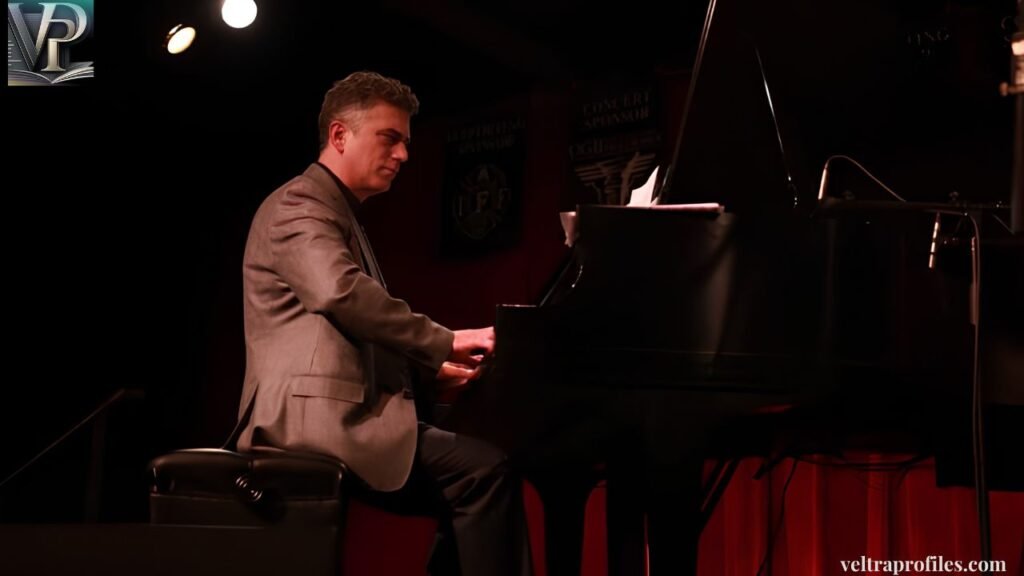
Quick Bio info
| Field | Detail |
|---|---|
| Full Name | John Rangel |
| Nickname | Not publicly documented |
| Gender | Male |
| Date of Birth | 1975 |
| Age | 51 years old |
| Birthplace | New York City, USA |
| Hometown | New York City, USA |
| Current Residence | Santa Fe, New Mexico |
| Nationality | American |
| Ethnicity | White |
| Religion | Not publicly documented |
| Education / Qualification | Hunter High School (gifted program); Eastman School of Music — studied composition under John Corigliano and jazz piano under Joanne Brackeen, Kenny Werner, Stanley Cowell, Richie Beirach, and Phil Markowitz |
| Profession | Jazz pianist, composer, producer, film scorer, and educator |
| Languages Spoken | English (confirmed) — others not publicly documented |
| Hobbies & Interests | Composing, film scoring, jazz education, performing |
| Marital Status | Not publicly documented (works alongside professional partner Barbara Bentree, though relationship status is unclear) |
Personal information
Full Name
John Rangel is his full name.
Nickname
No public nickname has been documented for him.
Gender
He is male.
Date of Birth
Listed as 1975, born in USA.
Age
Would be approximately 51 years old, based on the listed birth year.
Birthplace
He was born in New York City, USA.
Hometown
His hometown is New York City, USA.
Current Residence
He currently lives in Santa Fe, New Mexico.
Nationality
He holds American nationality.
Ethnicity
Listed as White, though this is not confirmed in any public source.
Religion
His religion has not been publicly documented.
Education / Qualification
He attended Hunter High School’s gifted program, then studied at the Eastman School of Music, training in composition under John Corigliano and jazz piano under Joanne Brackeen, Kenny Werner, Stanley Cowell, Richie Beirach, and Phil Markowitz.
Profession
He works as a jazz pianist, composer, producer, film scorer, and educator.
Languages Spoken
He is confirmed to speak English; other languages are not publicly documented.
Hobbies & Interests
He is involved in composing, film scoring, jazz education, and performing.
Marital Status
Not publicly documented. He works alongside professional partner Barbara Bentree, though the nature of that relationship isn’t specified in public sources.
Physical appearance
Height (Feet/Inches)
He stands 5 feet 8 inches tall.
Height (cm)
His height is 172 cm.
Weight (kg)
He weighs 70 kg.
Weight (lbs)
His weight is 154 lbs.
Eye Color
His eyes are black.
Hair Color
His hair color is black.
Body Type
He has a fit body type.
Skin Tone
His skin tone is fair.
Early Life and Musical Family Background in New York City
New York City shaped John Rangel before he ever touched a piano key. He grew up in one of the most musically saturated households imaginable. His mother and brother were opera singers. Everyone in the family played an instrument. Most remarkably his grandmother played jazz piano and taught it, planting the seed of what would become a lifelong obsession before John was old enough to fully understand what he was inheriting. Growing up surrounded by that density of musical activity didn’t just give him early exposure to performance. It gave him a deeply intuitive relationship with music as a form of human expression rather than simply a technical discipline to be mastered.
New York City in the decades when John Rangel was growing up was itself an extraordinary musical education. The city’s jazz scene, classical concert life, opera houses, and street-level musical culture created an environment where serious musical engagement felt natural and accessible rather than rarefied or elite. A child raised in a musical family in that city, attending a gifted academic program, absorbing opera from his mother and jazz from his grandmother, was absorbing decades of musical tradition through lived experience before any formal conservatory training began. That foundation of embodied, family-transmitted musical knowledge gave John Rangel something that can’t be taught in any institution: a genuine feeling for music as a living, breathing, deeply human practice.
The specific combination of classical and jazz influences within John Rangel’s family background explains a great deal about the breadth of his subsequent musical career. Opera singers develop an understanding of breath, phrasing, and the relationship between language and melody that differs fundamentally from purely instrumental training. A grandmother who both played and taught jazz piano brought a performance tradition rooted in spontaneity, rhythmic intelligence, and harmonic creativity. Growing up at the intersection of these two musical worlds, John Rangel developed a musical personality that was neither purely classical nor purely jazz but something genuinely integrated that would later allow him to compose for Jazz Chamber Orchestra, record Bach’s Well-Tempered Clavier, score Hollywood films, and lead jazz ensembles through bebop, ballads, and original compositions with equal authority and conviction.
Hunter High School and the Eastman School of Music
Hunter High School in New York City isn’t a typical high school. It’s one of the most academically selective institutions in the city, operating as a gifted program that draws students from across the five boroughs through a rigorous entrance examination process. Attending Hunter signals a specific kind of intellectual capacity and academic drive that goes well beyond musical talent alone. John Rangel’s selection for this program tells you something important about the full dimensions of his intelligence. He wasn’t just a musically gifted child from a musical family. He was someone whose intellectual abilities across multiple domains placed him among the most capable young minds in one of the world’s most intellectually competitive cities.

From Hunter High School he moved into formal conservatory training at the Eastman School of Music, one of the most respected music institutions in the entire United States. The Eastman School, housed at the University of Rochester in upstate New York, has produced some of the most celebrated performers, composers, and music educators in American musical history. Training there means competing with and learning alongside the most serious young musicians in the country within a curriculum that demands both technical mastery and genuine artistic development. For John Rangel, whose family background had already given him an unusually broad musical foundation, Eastman provided the rigorous technical framework that would allow his natural gifts and inherited sensibilities to reach their full potential.
From Hunter High School to Eastman — Building a World-Class Foundation
The educational path from Hunter High School to the Eastman School of Music represents one of the most impressive academic and artistic foundations any working jazz musician could bring to a professional career. Most jazz pianists enter the professional world through a combination of natural talent, informal mentorship, and performance experience. John Rangel entered it with all of those things plus the systematic technical and compositional training of a top-tier American conservatory.
That combination explains why his professional work has always operated across multiple formats and disciplines simultaneously rather than settling into the narrower lane that defines most working musicians’ careers. You don’t write String Quartets and Jazz Chamber Orchestra pieces and film scores and jazz quintet recordings and children’s musicals without the kind of broad, deep, systematically developed musical intelligence that serious conservatory training specifically develops.
Physical appearnace
| Field | Detail |
|---|---|
| Height (Feet/Inches) | 5 feet 8 inches |
| Height (cm) | 172cm |
| Weight (kg) | 70kg |
| Weight (lbs) | 154lbs |
| Eye Color | Black |
| Hair Color | Black |
| Body Type | Fit |
| Skin Tone | Fair |
Studying With John Corigliano and Jazz Piano Masters
The composition study that John Rangel undertook with John Corigliano places him in direct pedagogical lineage with one of the most celebrated American composers of the twentieth and twenty-first centuries. John Corigliano is a Pulitzer Prize winner, a Grammy Award winner, and an Academy Award winner for his score to The Red Violin. His Symphony No. 1, a response to the AIDS epidemic, stands as one of the most emotionally powerful and widely performed American orchestral works of the past fifty years. Studying composition with someone of that caliber doesn’t just teach you technique. It teaches you how a musical mind of genuine greatness approaches the relationship between emotional intention and compositional craft. That specific lesson shows up throughout John Rangel’s own compositional work, which consistently demonstrates the same integration of technical rigor and genuine human feeling that defines Corigliano’s most celebrated pieces.
Alongside his composition training with Corigliano, John Rangel studied jazz piano with five of the most respected figures in the field. Joanne Brackeen is a Grammy-nominated pianist whose rhythmic independence and harmonic sophistication place her among the most distinctive voices in American jazz piano. Kenny Werner is celebrated for his book Effortless Mastery and his deeply philosophical approach to musical creativity. Stanley Cowell was a founding member of the Strata-East Records collective and one of the most harmonically adventurous pianists of his generation. Richie Beirach brought a deep connection between jazz and classical European music to his pedagogy. And Phil Markowitz contributed a lyrical, melodically rich approach to jazz piano that balanced emotional directness with sophisticated harmonic thinking. Training with all five gave John Rangel a panoramic view of jazz piano possibility rather than the narrower perspective that studying with a single teacher inevitably produces.
The John Corigliano Connection — What It Means for John Rangel’s Legacy
The specific pedagogical relationship between John Rangel and John Corigliano deserves more attention than it typically receives in standard biographical coverage. Corigliano’s compositional approach is characterized by its refusal to settle into a single style or aesthetic. He moves between tonal lyricism, avant-garde experimentation, theatrical drama, and film scoring with a fluency that reflects deep engagement with the full breadth of musical possibility. His students don’t just learn technique.
They learn a way of thinking about music as a limitless creative resource rather than a fixed tradition to be reproduced. That philosophical inheritance shows up directly in John Rangel’s own career-long refusal to confine himself to a single genre or format. The pianist who records Bach’s Well-Tempered Clavier, leads a jazz sextet through original bebop compositions, scores a Marvel film, and writes musicals for children is practicing exactly the kind of creative omnivory that studying with Corigliano specifically teaches.
John Rangel in Los Angeles — Leimert Park and Jazz Legends
Moving to Los Angeles in the early 1990s was the decision that transformed John Rangel from a highly trained New York City musician into something genuinely rarer: a jazz artist with deep roots in two of America’s most culturally significant music communities simultaneously. He didn’t move to Los Angeles for the weather or the industry connections. He moved specifically to pursue music production and film scoring and to immerse himself in a creative environment that complemented rather than duplicated what New York had already given him. The city delivered on both counts almost immediately and the specific neighborhood where he planted himself made all the difference.
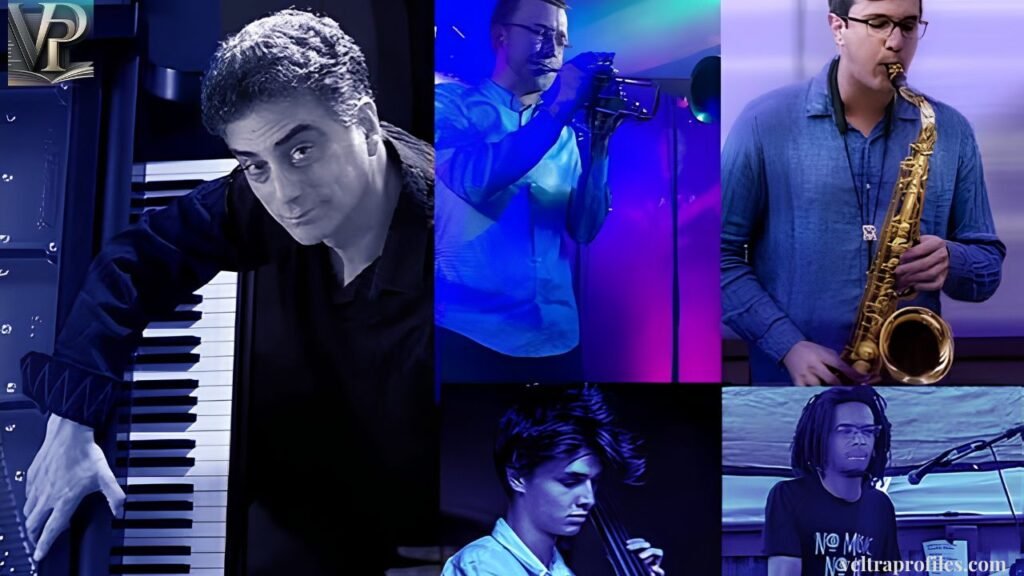
Leimert Park is a neighborhood in South Los Angeles that has carried the nickname the African Greenwich Village for decades and earned it completely. It has historically been the center of African-American Arts in Los Angeles, a community brimming with poets, artists, musicians, activists, and creative thinkers who built a genuinely alternative cultural space within the sprawling commercial landscape of the broader city. John Rangel immersed himself fully in this community and describes its influence on his musical direction and worldview as major and lasting. The specific cultural intelligence of Leimert Park, its insistence on music as community practice, spiritual expression, and political statement simultaneously, gave his formally trained compositional abilities an additional dimension of human depth that conservatory training alone simply doesn’t provide.
The list of artists John Rangel performed and recorded with during his Los Angeles years reads like a who’s who of American jazz royalty. Nat Adderley, the cornetist and younger brother of Cannonball Adderley, brought a blues-drenched warmth to everything he touched. Sam Rivers was one of the most adventurously free-thinking improvisers in the history of the music. Billy Higgins was among the most beloved and widely recorded drummers in jazz history. Ravi Coltrane carried the sonic legacy of his father John Coltrane into genuinely original territory. Pharaoh Sanders was a spiritual force in jazz whose collaborations with John Coltrane had already made him legendary before John Rangel entered his orbit. Performing and recording alongside this caliber of musician didn’t just build John Rangel’s resume. It built his musical character in ways that no amount of formal study could replicate.
John Rangel’s Hollywood Film Scoring Career
Few details in the John Rangel biography surprise people more than the breadth of his Hollywood film scoring work. His involvement in the music production teams for some of the most significant films of the past two decades connects him to a completely different audience from the jazz festival circuit and represents one of the most commercially significant dimensions of his creative career. His credits include productions that collectively generated hundreds of millions of dollars at the global box office and won numerous major awards including Academy Award nominations and wins.
Cold Mountain (2003), directed by Anthony Minghella and starring Jude Law, Nicole Kidman, and Renée Zellweger, won the Academy Award for Best Supporting Actress for Renée Zellweger and received widespread critical acclaim. Flags of Our Fathers (2006), directed by Clint Eastwood, explored the story of the soldiers who raised the flag at Iwo Jima and received significant awards recognition. Appaloosa (2008), directed by and starring Ed Harris alongside Viggo Mortensen, was a critically praised Western drama. And Thor (2011), the Marvel Cinematic Universe blockbuster that launched Chris Hemsworth’s career as one of Hollywood’s biggest stars, generated over $449 million at the global box office. John Rangel’s participation in the music production of these films places his work in front of audiences measured in tens of millions of viewers worldwide.
John Rangel on Television — NBC, Disney Channel, and Beyond
The television dimension of John Rangel’s career adds yet another layer to an already remarkably varied professional story. His recurring role on The John Larroquette Show on NBC gave him on-screen presence within a widely watched network comedy that aired from 1993 to 1996 and earned significant critical attention including Emmy Awards during its run. A recurring role on a successful NBC prime-time series represents a level of mainstream television visibility that most musicians never achieve and it demonstrates that John Rangel’s performance talents extended well beyond the concert stage and the recording studio into the different and demanding world of television acting.
His work as part of the music staff for multiple television shows produced by The Disney Channel added a completely different dimension to his television credentials. Disney Channel music production demands specific skills. The platform targets younger audiences while maintaining the extremely high production standards that the Disney brand requires across all of its properties. Contributing to multiple Disney Channel productions alongside his film scoring work and concert performance career demonstrates a professional versatility and commercial reliability that explains why his phone kept ringing from Hollywood throughout his years in Los Angeles. Additionally his multiple wins for Best Original Score across different productions confirm that his work consistently met or exceeded the specific creative and technical standards that film and television productions require from their music collaborators.
Film and Television Credits — Complete Table
| Production | Type | Notes |
|---|---|---|
| Thor | Film 2011 | Marvel Cinematic Universe — $449M global box office |
| Cold Mountain | Film 2003 | Academy Award winner — Anthony Minghella |
| Flags of Our Fathers | Film 2006 | Clint Eastwood director |
| Appaloosa | Film 2008 | Ed Harris, Viggo Mortensen |
| Heartbreakers | Film 2001 | Music production credit |
| Levity | Film 2003 | Music production credit |
| Origami in the Garden | Film | Music production credit |
| Dave Grusin: Not Enough Time | Documentary | Music production credit |
| My Choice | Film | Music production credit |
| The Kristin Chenoweth Show | Television | Music production credit |
| The John Larroquette Show | TV — NBC | Recurring on-screen role |
| Disney Channel Shows | Television — multiple | Music staff across several productions |
John Rangel Moves to Santa Fe — A New Musical Chapter
The decision to leave Los Angeles for Santa Fe, New Mexico in 2005 was one of the most consequential choices of John Rangel’s professional life. Santa Fe isn’t New York City or Los Angeles. It doesn’t have the same density of industry connections, recording studios, or commercial music infrastructure that both coasts offer. What it has instead is something rarer and arguably more valuable for an artist at a specific stage of creative development: space, quiet, a deeply rooted arts community, and an environment that actively supports creative work for its own sake rather than primarily as a commercial proposition. John Rangel responded to that environment with an explosion of creative productivity that produced some of the most ambitious and personally significant work of his entire career.

Since arriving in Santa Fe he has composed the Solar Concerto for Chamber Orchestra, a large-scale work representing his most ambitious purely compositional project. He has recorded Bach’s Well-Tempered Clavier Books 1 and 2, one of the most technically and interpretively demanding projects any classical pianist can undertake and a clear statement of his commitment to engaging with the full breadth of keyboard music tradition rather than limiting himself to any single style. He has produced numerous audio CDs, composed music for films and audiobooks, founded The Tribute Trio to honor legendary jazz piano icons, and established himself as one of New Mexico’s most influential and widely respected musicians. His role as music chairman and Artist in Residence at the New Mexico School for the Arts has made him a central figure in developing the next generation of New Mexico jazz talent.
Why Santa Fe Was the Right Move at the Right Time
The Santa Fe chapter of John Rangel’s career demonstrates something important about creative development that gets lost in narratives focused purely on commercial success and institutional recognition. The most significant artistic breakthroughs often happen not in the most commercially active environments but in the ones that provide the right combination of creative freedom, supportive community, and distance from the pressures and distractions of the commercial mainstream.
Santa Fe’s arts community gave John Rangel exactly that combination. The city’s deep history of supporting visual artists, writers, and musicians provided a cultural environment that treated serious artistic ambition as genuinely valuable rather than primarily as a stepping stone to commercial opportunity. His 17 New Mexico Music Awards across multiple categories reflect not just the quality of his work but the genuine engagement of a regional music community that recognized what it had in one of its most committed and talented members.
John Rangel’s Major Compositions — Solar Concerto and The Silver Hound
The compositional legacy of John Rangel extends well beyond jazz improvisation and film scoring into genuinely ambitious large-scale original works that demonstrate the full scope of his training and creative vision. The Solar Concerto for Chamber Orchestra is the most architecturally ambitious piece he has produced during his Santa Fe years, a work that brings together his classical training, his jazz sensibility, and his experience writing for multiple instrumental combinations into a single sustained creative statement. Composing for Chamber Orchestra requires a completely different skill set from writing for jazz ensemble or scoring for film. It demands mastery of orchestration, formal structure, and the specific acoustic relationships between different families of instruments that only years of serious compositional study produce.
The Silver Hound, premiered in 1996 for a sold-out Los Angeles audience, represents a different but equally significant dimension of his compositional ambition. Described as a major work for Jazz Chamber Orchestra and Rhythm Section, it was based upon the poetry of Ursula Vaughan Williams, the widow of legendary British composer Ralph Vaughan Williams. The choice of source material is revealing. Ursula Vaughan Williams was a serious literary figure in her own right and connecting her poetry to a jazz-informed orchestral framework reflects exactly the kind of cross-cultural, cross-genre creative thinking that defines John Rangel’s musical personality at its most distinctive. His additional compositional work includes String Quartets, Solo Piano Pieces, Art Songs, two Musicals for Children, and hundreds of jazz quartet and quintet compositions demonstrating a creative range that few musicians of any era have matched.
| Work | Type | Notes |
|---|---|---|
| Solar Concerto for Chamber Orchestra | Classical — orchestral | Composed in Santa Fe after 2005 |
| The Silver Hound | Jazz Chamber Orchestra and Rhythm Section | 1996 LA premiere — based on Ursula Vaughan Williams poetry |
| Bach’s Well-Tempered Clavier Books 1 and 2 | Classical recording | Most demanding classical keyboard project |
| String Quartets | Classical chamber music | Multiple works |
| Solo Piano Pieces | Piano music | Original compositions |
| Art Songs | Vocal and piano | Classical song tradition |
| Musicals for Children | Theater — two works | Accessible creative work |
| Jazz Quartet and Quintet pieces | Jazz ensemble | Hundreds of compositions |
| Film and audiobook scores | Film and audio | Multiple productions |
| Total compositions | All categories | Over 400 original works |
The sheer number of John Rangel’s original compositions, more than 400 across multiple genres and formats, places him in a category of creative productivity that very few working jazz musicians achieve. Writing that much original material requires not just inspiration but genuine compositional discipline, the ability to sit down and develop musical ideas systematically rather than waiting for the right moment to strike. His study with John Corigliano almost certainly contributed to developing exactly this kind of disciplined, productive compositional practice since Corigliano himself is known for the systematic rigor he brings to every compositional project regardless of its scale or format.
John Rangel’s Debut Album — PAGES (2006)
June 2006 marked the release of John Rangel’s debut jazz quintet recording, “Pages” — a significant milestone, since it came only after roughly two decades of playing, composing, touring, and teaching. In effect, Rangel spent most of his career building a reputation as a sideman, composer, and educator before releasing music under his own name. With hundreds of original compositions already written, PAGES marked the start of a more visible solo recording career.
Rangel has performed at prestigious venues and festivals across England, Germany, the Netherlands, Scotland, Africa, and Japan. His domestic highlights include Carnegie Hall in New York, Royce Hall in Los Angeles, the Gene Harris Jazz Festival in Idaho, the Playboy Jazz Festival, LACMA, MOCA, and the Central Avenue Jazz Festival, along with international stops such as the INNtöne Jazz Festival in Austria.
New Mexico Music Awards
Rangel is one of New Mexico’s most decorated jazz musicians. Sources vary slightly depending on publication date — his own website and several artist profiles cite 15 New Mexico Music Awards for music production, while more recent event listings (2023–2025) put the total at more than 17. He has also received multiple “Best Original Score” film accolades.The Thor credit in John Rangel’s filmography deserves specific attention because it connects him to one of the most commercially powerful entertainment franchises in history.
Thor (2011) directed by Kenneth Branagh wasn’t just a successful standalone film. It was a foundational entry in the Marvel Cinematic Universe that helped establish the broader mythology that has since generated billions of dollars across dozens of films and television series. John Rangel’s involvement in the music production for this film means his musical contribution has been heard by audiences on every inhabited continent. For a jazz pianist and composer rooted in the intimate traditions of New York jazz and the community arts culture of Leimert Park, that level of commercial reach represents an extraordinary extension of his musical influence into spaces that jazz has rarely penetrated directly.
FAQs About John Rangel
What is John Rangel known for?
He’s known for his versatility as a jazz pianist, composer, and educator — spanning concert jazz, classical recordings, Hollywood film scores (including Thor and Cold Mountain), and jazz education in New Mexico.
Where did John Rangel study music?
He attended Hunter High School’s gifted program in New York City, then trained at the Eastman School of Music, studying composition under John Corigliano and jazz piano under Joanne Brackeen, Kenny Werner, Stanley Cowell, Richie Beirach, and Phil Markowitz.
What films has John Rangel worked on?
His music production credits include Thor, Cold Mountain, Flags of Our Fathers, Appaloosa, Heartbreakers, Levity, and Origami in the Garden, among others.
Did John Rangel act on television?
Yes — he had a recurring role on NBC’s The John Larroquette Show and contributed to the music staff of several Disney Channel productions.
Where does John Rangel live now?
He has been based in Santa Fe, New Mexico since 2005, where he serves as Artist in Residence and music chairman at the New Mexico School for the Arts.
Conclusion
John Rangel’s career is defined by range rather than specialization — from a childhood immersed in opera and jazz in New York City, through elite conservatory training, to Hollywood film credits and a second creative chapter as a Santa Fe-based composer and educator. With over 400 compositions, a debut album released after two decades in the industry, and a growing list of regional honors, Rangel remains an active and expanding voice in American jazz.
Taken as a whole, John Rangel’s career is defined by range rather than specialization. From a childhood steeped in opera and jazz in New York City, through elite conservatory training under Corigliano and jazz masters like Brackeen and Cowell, to Hollywood film credits and a second creative life as a Santa Fe-based composer and educator, Rangel has consistently moved between musical worlds most artists only work within one of. His body of work — over 400 compositions, a debut album two decades in the making, and a growing list of regional and industry honors — reflects a musician still expanding his creative reach well into his fourth decade as a professional.