
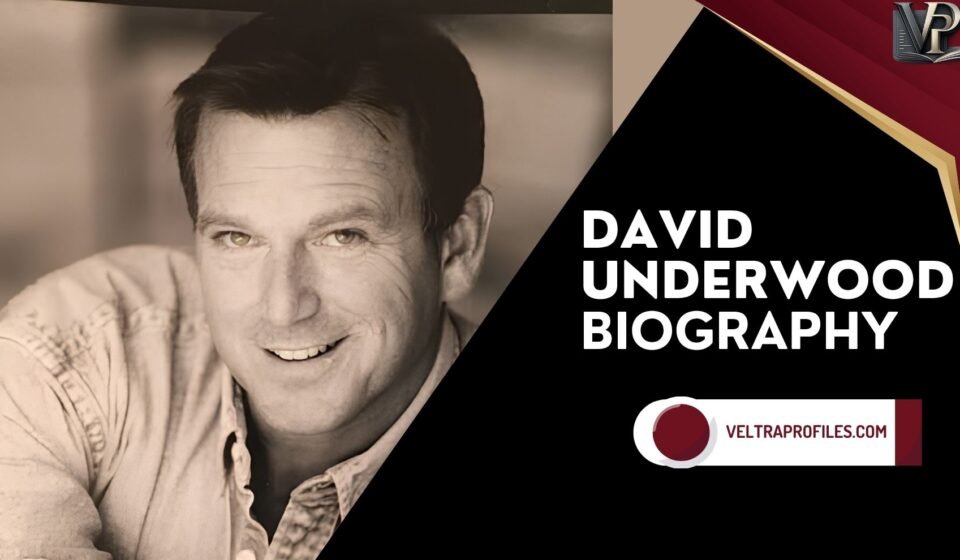

Some actors become famous through blockbusters and award ceremonies. Others burn themselves into cultural memory through a single iconic performance in a medium nobody expected to produce anything memorable. David Underwood belongs to the second category. If you owned a Sega CD in the early 1990s you already know exactly who he is even if you never knew his name. He’s the guy who leaned into the camera with manic energy and growled “WELCOME TO THE SEWERS, PUNK!” and made you genuinely excited about flying through underground tunnels shooting mutant rat creatures. That performance as Ghost in Sewer Shark (1992) became one of the most talked-about acting turns in the entire history of full motion video gaming and it gave David Underwood a specific kind of cult immortality that most conventionally successful actors never achieve.
But Sewer Shark isn’t the whole story. Before Ghost there was Ric Sawyer, the menacing high school bully he played in the 1984 cult film Angel, a role that placed him in one of that decade’s most memorably trashy and entertaining crime dramas. After Sewer Shark came television work spanning T.J. Hooker, CHiPs, and Beyond Belief Fact or Fiction, building a screen resume that went well beyond a single gaming credit. His career also extended behind the camera where he worked as a third assistant director across multiple productions. The full David Underwood biography is richer and more varied than any single memorable line of dialogue suggests.
Who Is David Underwood?
David Underwood is an American actor and third assistant director best known for two very different but equally memorable performances across two decades of screen work. The first is his role as Ric Sawyer, the high school bully in the 1984 cult crime film Angel. The second and far more culturally significant is his portrayal of Ghost, the wisecracking co-pilot in the landmark 1992 Sega CD video game Sewer Shark. That performance made David Underwood one of the most recognizable faces in early full motion video gaming history and earned him a specific kind of cult status that retrogaming communities still actively celebrate more than three decades after the game’s original release.
Read more: /sara-marley-biography/
His screen career spans the 1980s and 1990s across both film and television with credits including Flashback, Liar’s Moon, Splendor in the Grass, T.J. Hooker, CHiPs, Destination America, and Beyond Belief Fact or Fiction. His dual role as both actor and third assistant director reflects a professional engagement with filmmaking that went beyond performance into production work. David Underwood is also noted on his official IMDb biography for a striking physical resemblance to actor Jamey Sheridan, who later played Randall Flagg in the television adaptation of Stephen King’s The Stand, a trivia detail that has delighted fans who notice it independently while watching both performers’ work.

Quick Bio info
| Field | Detail |
|---|---|
| Full Name | David Underwood |
| Nickname | Ghost (his character name in Sewer Shark, sometimes used informally to refer to him) |
| Gender | Male |
| Date of Birth | 1970 |
| Age | |
| Birthplace | Not publicly documented |
| Hometown | Not publicly documented |
| Current Residence | Not publicly documented |
| Nationality | Not publicly documented (career based in the US) |
| Ethnicity | Not publicly documented |
| Religion | Not publicly documented |
| Education / Qualification | Not publicly documented |
| Profession | Actor |
| Languages Spoken | English (confirmed) — others not publicly documented |
| Hobbies & Interests | Not publicly documented |
| Marital Status | Not publicly documented |
Early Life and Background of David Underwood
The personal biography of David Underwood presents an honest challenge for any researcher. Unlike many actors of his era whose early lives are well documented through studio press materials, fan magazines, and archived interviews, David Underwood maintained a notably private personal profile throughout his career. His IMDb biography page contains no confirmed birth date, birthplace, or early life information beyond his acting credits and the two biographical notes about his Jamey Sheridan resemblance and his best-known roles. This isn’t unusual for character actors and supporting players who built careers in the 1980s and 1990s without the publicity infrastructure that surrounded leading men and women of the same period.
What the available evidence does confirm is a professional career rooted firmly in the Hollywood production world of the early 1980s. His earliest confirmed screen credits place him in film productions from 1984 onward suggesting an arrival in the professional acting world in the first half of that decade. The specific range of his television credits across T.J. Hooker, CHiPs, and other network productions of the mid-1980s indicates someone who had successfully navigated the specific challenges of breaking into Los Angeles television casting during one of the most competitive periods in the industry’s history. Building a working television career in that environment required genuine professional skill, reliable on-set behavior, and the specific physical presence that casting directors could visualize in supporting and guest roles across different productions.
The absence of confirmed personal biographical detail about David Underwood reflects a broader pattern in how the entertainment industry documented the lives of working character actors during the 1980s and 1990s. Leading actors received extensive biographical coverage through studio publicity departments, fan publications, and entertainment press. Supporting players and character actors, even genuinely talented and memorable ones, were largely left to their credits as their biographical record. David Underwood falls squarely within this historical pattern. His professional contributions are well documented across IMDb, TMDB, Rotten Tomatoes, and MUBI but the personal story behind those contributions remains largely private. What is certain is that his work speaks with clarity and confidence even when his personal biography doesn’t.
David Underwood’s Acting Career Beginnings
The acting career of David Underwood took shape during one of the most interesting and commercially energetic periods in Hollywood history. The early 1980s saw an explosion of genre filmmaking, particularly in crime drama, action, and exploitation cinema, that created enormous demand for supporting and character actors who could bring specific energy and physical presence to roles that weren’t necessarily complex but needed to feel genuinely inhabited. His earliest confirmed credits including Liar’s Moon, Splendor in the Grass, and Flashback place him within the fabric of that specific production environment before he landed his first widely recognized role in 1984.
His television work during this formative period demonstrates a professional range that moved comfortably across different network productions. Appearing in CHiPs, the long-running NBC motorcycle cop drama starring Erik Estrada and Larry Wilcox, required the ability to fit into a well-established ensemble without disrupting its tone. T.J. Hooker, the ABC police procedural starring William Shatner, demanded similar professional adaptability alongside one of television’s most recognizable leading men. These early television credits didn’t make David Underwood famous but they absolutely made him a known and trusted quantity within the casting community that controlled access to the specific kinds of roles where his energy and physical presence could be deployed most effectively.
The specific combination of film and television credits that David Underwood accumulated in his early career reflects a deliberate or at least instinctively smart approach to building a working actor’s resume. Television work provided steady income and consistent exposure to directors, producers, and casting agents who cast future projects. Film work provided the kind of permanent credit that survived beyond a single broadcast season and contributed to a filmography that could be referenced across a career rather than simply remembered by whoever happened to catch a specific episode of a specific show during its original run. His accumulation of credits across both formats in a relatively short period suggests a professional who understood how the system worked and moved through it with purposeful efficiency.
David Underwood in Angel 1984 — Playing Ric Sawyer
The 1984 cult film Angel gave David Underwood his first widely recognized screen role and connected him to one of that decade’s most memorably distinctive genre productions. Directed by Robert Vincent O’Neill and starring Donna Wilkes as Molly “Angel” Stewart, a teenage honor student who secretly works as a Hollywood Boulevard prostitute, the film deployed a specific kind of lurid, neon-lit Los Angeles atmosphere that made it one of the defining exploitation crime dramas of its era. The supporting cast assembled around Donna Wilkes included Cliff Gorman, Susan Tyrrell, Dick Shawn, Rory Calhoun, and John Diehl as the serial killer villain, a genuinely impressive ensemble for a low-budget genre production of that specific type.
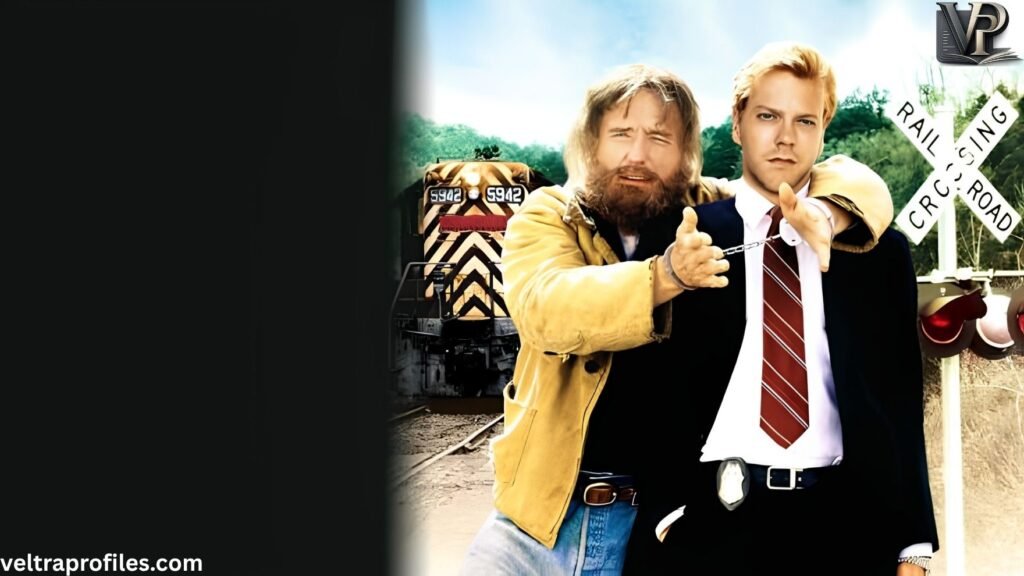
Within this ensemble David Underwood played Ric Sawyer, the high school bully whose menacing presence in the film’s school environment provided a different kind of threat from the serial killer plot dominating the main storyline. According to his official IMDb trivia page he is “perhaps best known as the high school bully Ric Sawyer from the cult film Angel,” a description that acknowledges the specific staying power that cult genre films tend to have within their dedicated fan communities long after their initial theatrical runs conclude. Angel has maintained an active cult following for four decades since its release and fans who discover or rediscover the film consistently seek out information about the actors who populated its memorably trashy and entertaining world.
| Detail | Information |
|---|---|
| Film Title | Angel |
| Release Year | 1984 |
| Director | Robert Vincent O’Neill |
| Lead | Donna Wilkes as Molly “Angel” Stewart |
| David Underwood’s Role | Ric Sawyer — high school bully |
| Co-stars | Cliff Gorman, Susan Tyrrell, Dick Shawn, Rory Calhoun, John Diehl |
| Genre | Cult crime drama |
| Setting | Hollywood Boulevard, Los Angeles |
| Legacy | Active cult following maintained for four decades |
| Streaming | Available on Prime Video |
The specific character type that Ric Sawyer represents, the physically imposing high school bully who deploys casual cruelty without particular motivation, requires a performer who can project threat without overplaying it into cartoonishness. David Underwood delivered exactly that balance in Angel and the role demonstrated early in his career that he possessed the specific screen presence needed to make supporting antagonist characters feel genuinely dangerous rather than simply obstructive to the plot. That quality would prove directly relevant when a much larger audience encountered his work eight years later in an entirely different medium through one of the most culturally significant gaming productions of the early Sega CD era.
David Underwood in Sewer Shark 1992 — The Ghost Character
Sewer Shark arrived in 1992 as one of the launch titles for the Sega CD console and it immediately established itself as something genuinely different from anything the gaming industry had produced before. David Underwood played Ghost, the player’s co-pilot and the most charismatic figure in the entire game’s fictional universe. Ghost occupies a specific and fascinating narrative position within Sewer Shark’s world. He isn’t the player’s superior in any formal sense but he absolutely dominates every scene he appears in, evaluating the player’s performance with a running commentary that ranges from encouraging to withering depending on how well you’re flying through the underground tunnels of a post-apocalyptic future city.
The character description that reviewers and fans have consistently reached for across three decades of discussing Ghost is revealing. The Just Games Retro review describes him as “the kind of smartass hotshot pilot you’d find in Top Gun” and notes that “Ghost is WAY over the top, and Underwood seems to be enjoying every minute of it.” The Sega-16 retrospective compares his energy directly to Bill Paxton’s iconic performance as Hudson in Aliens, calling the game “an interactive 80’s action flick with great performances from a cast who fully understand the spirit of it.” Both comparisons point toward the same essential quality in David Underwood’s performance: a performer who understood exactly what the material needed and committed to it completely without hesitation or self-consciousness.
| Detail | Information |
|---|---|
| Character Name | Ghost |
| Played By | David Underwood |
| Game | Sewer Shark (1992) |
| Platform | Sega CD — later 3DO (1994) |
| Developer | Digital Pictures |
| Publisher | Sony Imagesoft |
| Director | John Dykstra |
| Ghost’s Role | Co-pilot — evaluates player performance throughout |
| Opening Callsign | Gives player the callsign “Dogmeat” |
| Famous Quote | “WELCOME TO THE SEWERS, PUNK!” |
| Character Comparison | Reviewers compared Ghost to Top Gun pilot archetype and Bill Paxton’s Hudson in Aliens |
| Sales | Over 750,000 copies — bundled with second-generation Sega CD units |
How Sewer Shark Became a Gaming Legend
The story of Sewer Shark’s path to becoming a Sega CD launch title is one of the more fascinating origin stories in gaming history and understanding it gives essential context for appreciating what David Underwood’s performance actually contributed to. The game was originally filmed in 1987 for a completely different platform. Hasbro was developing a revolutionary VHS-based video game console called the Control-Vision (also referenced as NEMO) that would have allowed players to interact with full-motion video content recorded on standard videotape. Tom Zito, then working in Hasbro’s California-based interactive division, oversaw the creation of Sewer Shark and Night Trap as launch titles for this system. The total development cost for Sewer Shark was reported at approximately $3 million, an extraordinary investment for a video game production in 1987.
When Hasbro cancelled the Control-Vision console citing excessive hardware costs the footage sat in storage for five years. When Sega was preparing to launch its CD-ROM based console add-on to the Sega Genesis in 1992 the company needed launch titles that could demonstrate the platform’s capacity for a new kind of entertainment experience. Tom Zito had by this point founded Digital Pictures, his own interactive entertainment company, using the material from the cancelled Hasbro project as his foundation. Digital Pictures adapted the Sewer Shark footage for the Sega CD platform and Sony Imagesoft published it as one of the console’s first major releases. The game went on to sell over 750,000 copies and was eventually bundled with second-generation Sega CD units making it one of the system’s best-selling titles and placing David Underwood’s face in front of an audience that numbered in the hundreds of thousands.
| Year | Event |
|---|---|
| 1987 | Sewer Shark filmed for Hasbro Control-Vision VHS console — $3 million production budget |
| 1987 | Hasbro cancels Control-Vision console — footage shelved |
| 1987–1992 | Footage stored for five years while gaming landscape evolves |
| 1991 | Tom Zito founds Digital Pictures using cancelled Hasbro material |
| 1992 | Sega CD launches in North America — Sewer Shark released as launch title |
| 1992 | Entertainment Weekly calls it one of first games to incorporate humans in live-action FMV |
| 1993 | Associated Press includes Sewer Shark in top ten video games of the year list |
| 1994 | Sewer Shark ported to 3DO with higher quality FMV sequences |
| Various | Bundled with second-generation Sega CD units — sales exceed 750,000 copies |
The director of Sewer Shark was John Dykstra, a name that carries extraordinary weight in the history of American cinema. Dykstra served as the special photographic effects supervisor on the original Star Wars and Star Trek The Motion Picture and was a producer and creator of the original Battlestar Galactica pilot film. His involvement in a video game production in 1987 reflects the specific moment in entertainment history when the boundaries between Hollywood filmmaking and interactive entertainment were being actively negotiated by people with genuine creative ambitions on both sides of the divide. David Underwood’s performance under Dykstra’s direction benefited directly from this Hollywood-quality production approach, which is part of why Ghost feels like a genuine film character rather than a hastily assembled game mascot.
David Underwood’s Performance as Ghost — Why Fans Still Talk About It
Three decades after Sewer Shark’s original release retrogaming communities, YouTube retrospectives, and classic gaming review sites continue to cite David Underwood’s performance as Ghost as one of the genuine pleasures of early FMV gaming. That kind of sustained fan enthusiasm for a performance in an interactive game from 1992 is genuinely unusual and it raises an interesting question: what exactly did David Underwood do that has kept people talking for this long? The answer lies in a specific combination of commitment, timing, and a precise understanding of the material that most performers brought to FMV game productions of that era simply didn’t demonstrate.
The TV Tropes entry for Sewer Shark captures the essential quality with characteristic precision: “The intro is nothing but Underwood yelling hammy lines into the camera while overly-intense music punctuates his manly exclamations. It’s actually kind of awesome.” That phrase “it’s actually kind of awesome” is the key. Most FMV performances from this era fall into one of two categories: embarrassingly bad in a way that undermines any enjoyment of the surrounding material or blandly competent in a way that serves the game without adding anything memorable to it. David Underwood achieved something genuinely different. He pitched his performance at exactly the right frequency for the material, over-the-top enough to be genuinely entertaining but grounded enough in a specific character logic that Ghost feels like a real person operating within a specific world rather than an actor reading lines in a studio.

The comparison that gaming reviewers most consistently reach for when describing Ghost is the Top Gun pilot archetype, specifically the kind of aggressively confident, casually dangerous military hotshot that Tom Cruise popularized in the 1986 Tony Scott film. David Underwood channeled that specific cultural type with genuine understanding of what made it work. Ghost isn’t just loud and aggressive. He has a specific relationship with the player character that evolves across the game’s runtime as the player proves or fails to prove their worth as a sewer jockey. He gives the player the callsign “Dogmeat” at the beginning of the game, a deliberately unflattering designation that can be upgraded through good performance, and that callsign system creates a specific dynamic of earned respect that makes Ghost’s eventual approval feel genuinely satisfying rather than arbitrary. David Underwood understood that dynamic and played every variation of Ghost’s responses with the specific emotional logic of a character whose approval actually matters to the player’s experience of the game.
David Underwood in Beyond Belief Fact or Fiction
Beyond Belief Fact or Fiction was one of the more unusual anthology television productions of the late 1990s, a show that presented five dramatized segments per episode and challenged viewers to determine which were based on real events and which were entirely fictional. The show originally aired from 1997 and featured James Brolin as its host across multiple seasons before various other hosts took over for subsequent runs. David Underwood appeared in the series during its 1997 run, adding a television credit from the late 1990s to a resume that had been built primarily across the 1980s and early 1990s.
The anthology format of Beyond Belief Fact or Fiction suited the specific skills of character actors like David Underwood particularly well. Each episode’s five segments required different performers for different short-form dramatic stories, creating consistent demand for actors who could establish character quickly, deliver convincing performances within compressed timeframes, and then move on without the extended character development that conventional dramatic series allowed. These are precisely the skills that a working character actor builds across years of television guest appearances and supporting film roles and they are precisely the skills that David Underwood had been developing since his earliest television work in the CHiPs and T.J. Hooker era of the mid-1980s. His appearance in Beyond Belief Fact or Fiction confirmed that his professional reputation within the Hollywood casting community remained active and viable well into the late 1990s.
David Underwood in T.J. Hooker and CHiPs
The television work David Underwood accumulated across T.J. Hooker and CHiPs during the mid-1980s placed him within two of the most commercially successful police procedural franchises in American network television history. T.J. Hooker aired on ABC from 1982 to 1986 and starred William Shatner as Sergeant T.J. Hooker, a veteran street cop who returns to patrol duty after his partner’s death. The show was produced by Aaron Spelling, one of the most powerful television producers of his era, and maintained consistently strong ratings across its run. David Underwood played Detective Roberts in at least one episode, a credit documented across IMDb and the TV Database Wiki which specifically references the episode “The Empty Gun” as one of his appearances on the show.
CHiPs presented a different but equally significant television platform for David Underwood during the same general period. The NBC drama ran from 1977 to 1983 and followed two California Highway Patrol motorcycle officers, Frank “Ponch” Poncherello played by Erik Estrada and Jon Baker played by Larry Wilcox, through their patrol duties and personal lives. The show’s enormous popularity across its six-season run made it one of the defining American police procedurals of the late 1970s and early 1980s and its guest cast across those seasons represented a significant portion of the working character actor community in Los Angeles during that period. David Underwood’s appearance on CHiPs connected him to that specific professional community and the production network surrounding it in ways that directly supported his ongoing career development through the decade.
| Show | Network | Run | Stars | David Underwood’s Role |
|---|---|---|---|---|
| T.J. Hooker | ABC | 1982–1986 | William Shatner | Detective Roberts — “The Empty Gun” episode |
| CHiPs | NBC | 1977–1983 | Erik Estrada, Larry Wilcox | Supporting guest role |
| Beyond Belief Fact or Fiction | Fox | 1997 onwards | James Brolin (host) | Anthology dramatic segment |
| Destination America | Various | Various | Ensemble | Supporting credit |
David Underwood as Third Assistant Director
The acting credits that define David Underwood’s public profile represent only one dimension of a professional career that extended behind the camera into production work. His TMDB profile specifically lists him as both an actor and a third assistant director, a production role that places him within the organizational hierarchy of film and television sets in a capacity completely separate from his on-screen work. The third assistant director sits within the assistant director department and carries specific responsibilities around set management, background artist coordination, and the logistical support of daily production schedules under the supervision of the first and second assistant directors. It’s unglamorous, demanding work that requires deep practical knowledge of how film productions actually function from the inside rather than from the front of the camera.
Understanding this dual professional identity changes the picture of David Underwood considerably. He wasn’t simply a working actor who accepted whatever roles came his way between jobs. His third assistant director work also likely contributed directly to his comfort and confidence within film production environments in ways that benefited his on-screen performances even when his behind-camera contributions were never publicly credited alongside his acting work.
The assistant director department on any film or television production is the engine room that keeps daily shooting on schedule and on budget. The first assistant director manages the overall shooting schedule and coordinates between departments. The second assistant director handles paperwork, talent management, and communication between departments. The third assistant director typically manages background performers and extras, communicates shooting schedules and call times, coordinates crowd scenes, and provides general logistical support across a production day. This work requires the specific combination of organizational intelligence, interpersonal communication skill, and practical knowledge of film production systems that David Underwood clearly developed across his professional career.
David Underwood Complete Filmography
The complete screen career of David Underwood spans the 1980s and 1990s across both film and television with a body of work that reflects the specific range and variety of a professional character actor who moved comfortably between different genres, formats, and production scales throughout his active career. His filmography is most notable for the combination of genuine cult film credentials through Angel and genuinely historic gaming credentials through Sewer Shark, two very different kinds of cultural permanence that together give him a more interesting and varied legacy than either credit alone would suggest.
Looking at the complete list of his known credits the pattern that emerges most clearly is consistent professional activity across a fifteen-year period in one of the world’s most competitive entertainment markets. He worked in studio productions and low-budget genre films. He appeared on major network television procedurals and in anthology drama series. He took on gaming work when the medium was still figuring out what it was and delivered a performance that gaming historians and retro enthusiasts still discuss thirty years later.
| Year | Title | Role | Format |
|---|---|---|---|
| Early 1980s | Splendor in the Grass | Supporting role | Film |
| Early 1980s | Liar’s Moon | Supporting role | Film |
| Early 1980s | CHiPs | Guest role | TV Series NBC |
| 1983–1986 | T.J. Hooker | Detective Roberts — “The Empty Gun” | TV Series ABC |
| 1984 | Angel | Ric Sawyer — high school bully | Cult film |
| Mid-1980s | Flashback | Supporting role | Film |
| Various | Destination America | Supporting role | TV |
| 1992 | Sewer Shark | Ghost — co-pilot | Sega CD FMV game |
| 1994 | Sewer Shark | Ghost — co-pilot | 3DO port |
| 1997 | Beyond Belief Fact or Fiction | Anthology dramatic role | TV Series Fox |
This filmography tells the story of a professional who found his two most significant cultural contributions at opposite ends of the entertainment industry spectrum. Angel connected him to the Hollywood tradition of low-budget cult genre filmmaking that produced some of the most durably entertaining work of the 1980s. Sewer Shark connected him to the very beginning of a new entertainment medium that would eventually become one of the largest creative industries in the world. Between those two anchor credits his television work across T.J. Hooker, CHiPs, and Beyond Belief Fact or Fiction documented a working professional who showed up consistently and contributed reliably to productions across more than a decade of continuous industry engagement.
David Underwood and the John Dykstra Connection
One of the most genuinely fascinating contextual details surrounding David Underwood’s most famous performance is the identity of the person who directed it. John Dykstra directed Sewer Shark and his presence behind the camera on a 1987 video game production is one of the more remarkable crossover moments in the history of entertainment industry creativity. Dykstra served as the visual effects supervisor on the original Star Wars (1977), work that earned him an Academy Award for Special Achievement and established him as one of the most technically innovative filmmakers of his generation. He also worked as a key effects contributor on Star Trek The Motion Picture and served as producer and visual effects supervisor on the original Battlestar Galactica pilot film. His decision to direct an interactive video game production in 1987 reflected a genuine curiosity about new storytelling forms at a moment when the entertainment industry was beginning to recognize that the line between film and gaming might eventually blur in significant ways.
Working under John Dykstra’s direction gave David Underwood a professional context that no conventional television guest appearance could have provided. Dykstra understood performance within the specific demands of technically complex production environments because his entire career had been built around making human performance work within extraordinary technical constraints. His experience staging practical effects sequences, managing large-scale production logistics, and maintaining creative coherence across technically demanding shooting environments all transferred directly into the challenges of directing an FMV video game production where the interactive branching structure created narrative complexity that conventional film directing experience didn’t fully prepare anyone for. David Underwood performed within this specific creative environment and delivered work that held up not just as a game performance but as a genuine character study compressed into the constraints of an early interactive medium.
| Production | Year | Dykstra’s Role | Significance |
|---|---|---|---|
| Star Wars | 1977 | Special photographic effects supervisor | Academy Award for Special Achievement |
| Star Trek The Motion Picture | 1979 | Visual effects supervisor | Major studio franchise |
| Battlestar Galactica | 1978 | Producer and VFX supervisor | Landmark sci-fi television |
| Invaders from Mars | 1986 | Second unit director | Pre-Sewer Shark directing work |
| Sewer Shark | 1987 filmed / 1992 released | Director | Historic FMV gaming landmark |
The technical sophistication that John Dykstra brought to Sewer Shark is visible in details that reviewers consistently noticed even when the Sega CD’s limited color palette degraded the visual quality of the final product. The set design for the sewers was genuinely atmospheric. The production used multiple interleaved video streams to create a branching narrative structure that was technically innovative for its era. The performance direction clearly encouraged David Underwood to commit fully to the material rather than treating it as a lesser creative assignment than conventional film work. All of these qualities trace directly back to a director who had spent his career refusing to treat technical constraints as creative limitations and who brought that same refusal to the specific challenges of making an interactive film work as entertainment.
David Underwood Personal Life and Current Status
The personal life of David Underwood remains almost entirely undocumented in publicly available sources. No verified information about his birth date, birthplace, family, education, or personal relationships appears in any accessible biographical database connected to his name. His IMDb biography page contains two brief biographical notes, the observation about his resemblance to Jamey Sheridan and the identification of Ric Sawyer from Angel as his best-known role, but nothing else in terms of personal detail. His TMDB profile confirms his professional dual identity as actor and third assistant director but similarly offers no personal biographical information. This level of biographical privacy is unusual even by the standards of character actors from his era but it reflects a consistent pattern throughout his career of letting the work speak rather than cultivating personal celebrity.
What is equally unclear is his current professional status. His confirmed screen credits appear to end in the late 1990s with his 1997 appearance in Beyond Belief Fact or Fiction representing the latest confirmed entry in his publicly documented filmography. Whether he continued working in production in an uncredited capacity, transitioned to work behind the camera in his third assistant director role without taking further acting assignments, or stepped away from the entertainment industry entirely is not documented in any verifiable public source. The retrogaming community that celebrates his work as Ghost in Sewer Shark has periodically attempted to locate current information about David Underwood without success and his continued absence from public professional records suggests a deliberate or at least sustained withdrawal from the public-facing dimensions of entertainment industry life that characterized his active career years.
Trivia and Lesser-Known Facts About David Underwood
The trivia surrounding David Underwood rewards careful attention because the most interesting details tend to be the ones that connect his specific career to much larger stories about the history of American entertainment. His official IMDb biography contains two specific biographical notes that stand out from the standard credit listings. The first is the observation that he “resembles actor Jamey Sheridan (Randall Flagg from The Stand), who came after him.” This is a genuinely unusual kind of biographical note to appear on an IMDb page and it reflects a specific kind of fan community recognition that tends to develop around character actors whose faces stick in the memory even when their names don’t immediately attach.
Jamey Sheridan played Randall Flagg, the supernatural villain of Stephen King’s The Stand, in the celebrated 1994 ABC television miniseries and his performance became one of the defining screen portrayals of a Stephen King villain in the entire history of King adaptations. The fact that David Underwood so closely resembled this actor that the resemblance warranted specific mention in his official biography suggests a physical presence distinctive enough to invite direct comparison to a recognizable public figure and specific enough that multiple people noticed it independently. The additional note that Sheridan came after Underwood implies that anyone who encountered Underwood’s work first would recognize the resemblance when they later encountered Sheridan’s career rather than the reverse, a small but telling observation about how physical types migrate through the specific casting ecology of Hollywood character acting across different decades.
| Fact | Detail |
|---|---|
| IMDb resemblance note | Officially noted to resemble Jamey Sheridan — Randall Flagg from The Stand |
| Ghost callsign | Gives player the callsign “Dogmeat” at game opening — upgradeable through good performance |
| Famous opening line | “WELCOME TO THE SEWERS, PUNK!” — yelled directly into camera |
| Sewer Shark filmed 1987 | Performance filmed five years before game released — for cancelled Hasbro Control-Vision VHS console |
| John Dykstra | Directed by Star Wars special effects supervisor and Academy Award winner |
| 750,000 copies | Sewer Shark sold over 750,000 copies — bundled with second-generation Sega CD |
| Associated Press | Sewer Shark named one of Associated Press top ten video games of 1993 |
| 3DO port | Ghost performance appeared in higher quality on 3DO version released 1994 |
| Dual career | Listed as both actor and third assistant director on TMDB professional profile |
| Ghost vs Stenchler | Ghost character is in constant conflict with villain Commissioner Stenchler played by Robert Costanzo |
| Top Gun comparison | Multiple reviewers independently compared Ghost character energy to Top Gun pilot archetype |
| Bill Paxton comparison | Sega-16 retrospective compared Ghost specifically to Bill Paxton’s Hudson in Aliens |
| Ric Sawyer | IMDb trivia page specifically identifies Ric Sawyer from Angel as his “perhaps best known” role |
| Entertainment Weekly | Sewer Shark called one of first games to incorporate humans in live-action FMV by Entertainment Weekly |
| Dragon’s Lair comparison | Sewer Shark’s navigation mechanic compared to Dragon’s Lair by multiple reviewers |
The story of Sewer Shark’s production history adds an extraordinary layer of context to David Underwood’s most famous performance. The footage that made him a cult gaming icon was filmed in 1987 and sat in a Raiders of the Lost Ark-style warehouse for five years before Tom Zito founded Digital Pictures and adapted it for the Sega CD. This means David Underwood filmed the performance that would define his public legacy five years before any audience saw it, in a production environment he may have believed was permanently cancelled alongside the Hasbro Control-Vision console it was designed for. The specific combination of circumstances that brought his performance to a mass audience — Hasbro’s cancellation, Tom Zito’s entrepreneurial response, Sega’s need for launch titles for a new platform — was genuinely improbable and David Underwood had no control over any of it. His contribution was to film a committed, energetic, and genuinely memorable performance and then trust that someone would eventually give it an audience.
FAQs About David Underwood
Who is David Underwood?
David Underwood is an American actor and third assistant director best known for playing Ghost in the landmark 1992 Sega CD video game Sewer Shark and Ric Sawyer, the high school bully, in the 1984 cult film Angel. His screen career spans the 1980s and 1990s across film and television productions including T.J. Hooker, CHiPs, Flashback, Liar’s Moon, and Beyond Belief Fact or Fiction.
Who played Ghost in Sewer Shark?
David Underwood played Ghost, the co-pilot character who evaluates the player’s performance throughout Sewer Shark (1992). His performance was filmed in 1987 for the cancelled Hasbro Control-Vision VHS console and later adapted for the Sega CD by Digital Pictures under the direction of John Dykstra, the Academy Award-winning Star Wars special effects supervisor.
What is the famous Ghost quote from Sewer Shark?
Ghost’s most famous line delivered by David Underwood directly into the camera is “WELCOME TO THE SEWERS, PUNK!” He also gives the player the callsign “Dogmeat” at the game’s opening and delivers a running commentary of performance evaluation throughout the gameplay that ranges from enthusiastic encouragement to withering contempt depending on how well the player performs.
What is David Underwood known for in Angel 1984?
In Angel (1984) David Underwood played Ric Sawyer, the high school bully. His IMDb trivia page describes him as “perhaps best known as the high school bully Ric Sawyer from the cult film Angel” which has maintained an active fan following for over four decades since its original release.
What other TV shows did David Underwood appear in?
Beyond Sewer Shark and Angel his confirmed television credits include T.J. Hooker (as Detective Roberts in “The Empty Gun” episode), CHiPs, Beyond Belief Fact or Fiction (1997), and Destination America. He also appeared in films including Flashback, Liar’s Moon, and Splendor in the Grass.
Who does David Underwood resemble?
His official IMDb biography specifically notes that he resembles actor Jamey Sheridan who played Randall Flagg in the 1994 ABC television adaptation of Stephen King’s The Stand, adding that Sheridan “came after him.”
Where is David Underwood now?
David Underwood’s current whereabouts and professional status are not publicly documented. His confirmed screen credits appear to end in the late 1990s and he has not given public interviews or made documented appearances at gaming conventions or cult film events despite sustained fan interest in his work as Ghost in Sewer Shark.
Conclusion
The complete story of David Underwood is one of the more quietly remarkable careers in the history of American entertainment. He played a memorably menacing high school bully in a cult 1984 crime film that has maintained an active fan following for over four decades. He delivered what many retrogaming historians consider the most memorable individual performance in the entire history of full motion video gaming, filmed for a cancelled platform in 1987 and eventually seen by hundreds of thousands of players on the Sega CD and 3DO across the early 1990s. He built a working television career across major network productions including T.J. Hooker and CHiPs during one of the most competitive periods in Hollywood history. And he contributed to film production behind the camera as a third assistant director in ways that demonstrated a professional commitment to the craft of filmmaking that extended well beyond the desire for personal screen recognition.
What makes David Underwood’s legacy particularly interesting is the specific combination of cultural contexts his work touched. Angel connected him to the Hollywood exploitation film tradition. Sewer Shark connected him to the birth of interactive entertainment as a mainstream medium. His television credits connected him to the defining network procedurals of the 1980s. And his resemblance to Jamey Sheridan connected him inadvertently to one of the most celebrated Stephen King adaptations in television history. None of these connections were planned or managed through a celebrity publicity strategy. They simply accumulated through the work of a professional who showed up, committed fully to whatever material he was given, and trusted the work to find its audience. For Ghost in Sewer Shark that audience found him in extraordinary numbers and has never entirely let go. That’s not a bad legacy for a character actor who yelled “WELCOME TO THE SEWERS, PUNK!” into a camera in 1987 and made it unforgettable.